Time Management for Exams: Study Smarter Not Harder
Time Management for Exams: Study Smarter, Not Harder
Facing exams can feel like a race against the clock. The sheer volume of material, coupled with the pressure to perform, often leads to late-night cramming sessions and overwhelming stress. However, effective time management for exams isn't about working harder; it's about working smarter. By implementing strategic planning and study techniques, you can transform your revision period from a frantic scramble into a focused, productive, and ultimately more successful experience. This guide will equip you with the tools to study smarter, not harder for your upcoming examinations, ensuring you retain information, reduce anxiety, and achieve your best possible results.
Key Points:
- Strategic Planning: Develop a realistic study schedule.
- Active Recall: Engage with material, don't just reread.
- Prioritization: Focus on high-impact topics.
- Breaks & Well-being: Integrate rest for optimal performance.
- Exam Simulation: Practice under timed conditions.
The Foundation: Strategic Planning for Exam Success
The cornerstone of effective time management for exams is a well-structured study plan. Without a roadmap, it's easy to get lost or focus on less critical areas. This involves understanding your exam format, identifying all the topics you need to cover, and then allocating realistic time slots for each. A common pitfall is underestimating the time required for complex subjects or overestimating your ability to absorb information quickly. By building a detailed, yet flexible, plan, you create a sense of control and direction.
Creating Your Exam Study Schedule
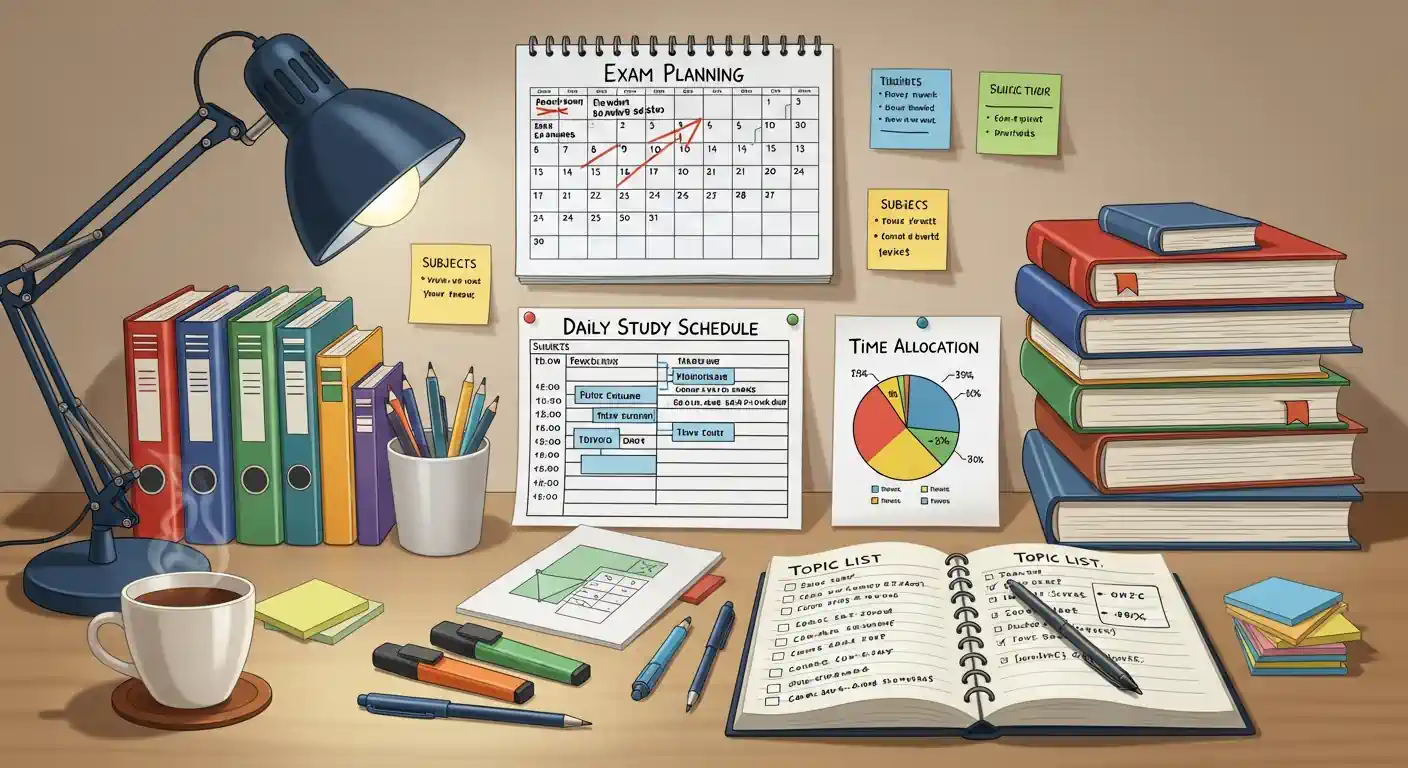
Developing a study schedule that works for you is a crucial first step. Start by listing all your exams and their respective dates. Then, for each subject, identify the key topics and sub-topics. Break down large topics into smaller, manageable chunks. For instance, instead of "History: World War II," list "Causes of WWII," "Major Battles," "The Holocaust," and "Post-War Outcomes."
- Assess Current Knowledge: Honestly evaluate your understanding of each topic. Mark areas where you feel strong and those that require more attention. This helps in prioritizing your efforts.
- Allocate Time Realistically: Based on topic complexity and your current understanding, assign specific study blocks. Don't forget to factor in time for revision, practice questions, and potential review sessions.
- Build in Buffer Time: Unexpected events happen. Include some buffer periods in your schedule to catch up if you fall behind or to revisit topics that proved more challenging.
- Schedule Regular Breaks: Your brain needs rest to consolidate information. Short, frequent breaks are more effective than long, infrequent ones. Aim for a 5-10 minute break every 45-60 minutes of study.
Prioritization: Focusing on High-Impact Topics
Not all topics carry equal weight or difficulty. To study smarter, not harder, prioritize your revision efforts. This means dedicating more time and attention to subjects or topics that are:
- Heavily Weighted: Check your syllabus or exam breakdown to see which topics contribute most to your final grade.
- Conceptually Difficult: If a topic is inherently complex or you consistently struggle with it, it warrants more dedicated study time.
- Foundational: Some topics serve as building blocks for others. Ensure you have a solid grasp of these before moving on to more advanced material.
- Expert Tip: Consider using a prioritization matrix to visually organize your topics based on importance and difficulty. This can be a highly effective tool for exam preparation time management.
Active Learning: Engaging with the Material
Passive learning, such as simply rereading notes or textbooks, is rarely effective for long-term retention. To truly study smarter, you need to engage actively with the material. Active learning techniques force your brain to process information in deeper ways, leading to better understanding and recall.
Techniques for Active Studying
- Active Recall: This is perhaps the most powerful active learning strategy. Instead of rereading, try to recall information from memory. Test yourself frequently by closing your book and asking questions like, "What are the main causes of X?" or "Explain the process of Y."
- Spaced Repetition: Revisit material at increasing intervals. Instead of cramming, review a topic shortly after learning it, then a day later, then a few days later, and so on. This strengthens memory over time.
- Feynman Technique: Try to explain a concept in simple terms, as if you were teaching it to someone who knows nothing about the subject. Identify gaps in your understanding and then go back to your notes or resources to fill them.
- Mind Mapping: Visually organize information by creating diagrams that connect ideas. This helps you see relationships between different concepts and provides a holistic overview of a topic.
- Practice Questions: Work through as many practice questions as possible. This not only tests your knowledge but also familiarizes you with the exam format and the types of questions you can expect.
The Power of Simulation: Practice Under Exam Conditions
One of the most effective, yet often overlooked, time management for exams strategies is to simulate the exam environment. This goes beyond just answering practice questions; it involves doing so under strict time constraints.
Mimicking Exam Conditions
- Timed Practice Tests: Set a timer for the exact duration of your actual exam and complete a full practice paper without interruptions. This helps you gauge your pacing and identify areas where you tend to run out of time.
- Quiet Environment: Choose a quiet space where you won't be disturbed, just as you would expect in an exam hall.
- No External Aids: Resist the temptation to look up answers or use notes unless the actual exam permits it.
- Analyze Performance: After completing a timed practice test, thoroughly review your answers. Identify not only what you got wrong but why you got it wrong. Was it a lack of knowledge, misinterpretation of the question, or time pressure?
- Differentiated Value: Many students focus on content mastery but neglect the psychological and practical aspects of exam-day performance. Simulating exam conditions builds exam resilience, a critical component of academic success that goes beyond mere knowledge acquisition. This is a key differentiator from simply doing practice questions.
Integrating Well-being into Your Study Plan
Effective time management for exams is not just about squeezing more study hours into your day; it's about optimizing your cognitive function through proper self-care. Burning out will hinder your ability to learn and perform.
Essential Well-being Practices
- Adequate Sleep: Aim for 7-9 hours of quality sleep per night. Sleep is crucial for memory consolidation and cognitive function. Studies from institutions like the National Sleep Foundation consistently highlight the link between sleep deprivation and reduced academic performance, with their recent reports in 2024 emphasizing the critical window for memory formation during REM sleep.
- Healthy Nutrition: Fuel your brain with balanced meals. Avoid excessive sugar and processed foods that can lead to energy crashes. Stay hydrated by drinking plenty of water.
- Regular Exercise: Physical activity improves blood flow to the brain, reduces stress, and boosts mood. Even short walks can make a significant difference.
- Stress Management: Incorporate relaxation techniques such as deep breathing, meditation, or mindfulness. Spending time with friends or engaging in hobbies can also help alleviate pressure.
- Differentiated Insight: In an era where academic pressures are increasing, incorporating proactive mental health strategies as a core component of time management is vital. This moves beyond simply advising students to "take breaks" and emphasizes building resilience and coping mechanisms. This approach is supported by emerging research in cognitive psychology, with a 2025 review in the Journal of Applied Psychology suggesting that integrating mindfulness into study routines can significantly improve focus and reduce test anxiety.
Leveraging Technology for Smarter Studying
Technology can be a powerful ally in your time management for exams journey, offering tools that enhance organization, learning, and recall.
Helpful Tech Tools
- Calendar Apps: Google Calendar, Outlook Calendar, or dedicated student planners can help you schedule study sessions, track deadlines, and set reminders.
- Note-Taking Apps: Evernote, OneNote, or Notion allow you to organize notes digitally, add multimedia, and sync across devices.
- Flashcard Apps: Quizlet, Anki, or Memrise utilize spaced repetition algorithms to help you memorize information effectively.
- Focus Apps: Forest, Freedom, or Cold Turkey can block distracting websites and apps, helping you maintain concentration during study periods.
- Online Learning Platforms: Platforms like Coursera or edX offer supplementary courses or lectures that can clarify difficult concepts.
Overcoming Procrastination and Staying Motivated
Procrastination is the enemy of effective time management for exams. Identifying the root cause of procrastination is the first step to overcoming it.
Strategies to Beat Procrastination
- Break Down Tasks: Large, daunting tasks are prime candidates for procrastination. Break them down into smaller, more manageable steps.
- The Two-Minute Rule: If a task takes less than two minutes, do it immediately. This builds momentum and prevents small tasks from piling up.
- Reward Yourself: Set small rewards for completing study goals. This positive reinforcement can be a powerful motivator.
- Accountability Partners: Study with a friend or form a study group. Knowing someone else is relying on you can help you stay on track.
- Visualize Success: Imagine yourself confidently walking out of the exam hall after a well-prepared session. This positive visualization can boost motivation.
Final Review and Exam Day Preparedness
As your exams approach, shift your focus from learning new material to consolidation and review. This is where your time management for exams plan truly pays off.
The Final Countdown
- Review Summaries: Go over your mind maps, summaries, and flashcards.
- Target Weak Areas: Dedicate the last few days to reinforcing topics you still find challenging.
- Light Revision: Avoid introducing entirely new concepts in the days immediately preceding an exam.
- Logistics: Confirm exam times, locations, and any permitted materials.
- Rest: Ensure you get a good night's sleep before each exam.
Frequently Asked Questions
Q1: How can I create a realistic study schedule for multiple exams? A realistic schedule involves listing all exams and deadlines, assessing topic difficulty and weight, and allocating specific, manageable study blocks for each. Incorporate buffer time and regular breaks to avoid burnout and allow for flexibility.
Q2: What is the most effective way to retain information for exams? Active recall and spaced repetition are highly effective. Instead of passively rereading, actively test yourself by recalling information from memory and revisit material at increasing intervals to strengthen long-term retention.
Q3: How much time should I dedicate to practice questions? Dedicate a significant portion of your revision time to practice questions, especially under timed conditions. This helps you understand question formats, identify knowledge gaps, and improve your pacing, directly contributing to better exam time management.
Q4: What are the signs that I might be procrastinating on my exam preparation? Signs include delaying starting study tasks, feeling overwhelmed by the amount of work, finding excuses to do other things, or only studying when under intense pressure. Recognizing these signs is the first step to implementing strategies to overcome procrastination.
Conclusion: Master Your Time, Master Your Exams
Effective time management for exams is a skill that, once honed, can significantly reduce stress and improve academic performance. By moving beyond simply working harder to embracing strategies that allow you to study smarter, not harder, you empower yourself to learn more efficiently and retain information more effectively. Remember, a well-planned study schedule, active engagement with material, strategic prioritization, and a commitment to your well-being are the pillars of exam success.
Start implementing these techniques today, and transform your exam preparation from a daunting task into a controlled, productive, and ultimately rewarding experience. Your future self, confident and well-prepared, will thank you.
We encourage you to share your own best time management tips in the comments below! For further insights into optimizing your learning, explore our related articles on effective note-taking strategies and stress management techniques for students.