Time Management for Exams: Strategies for Peak Academic Performance
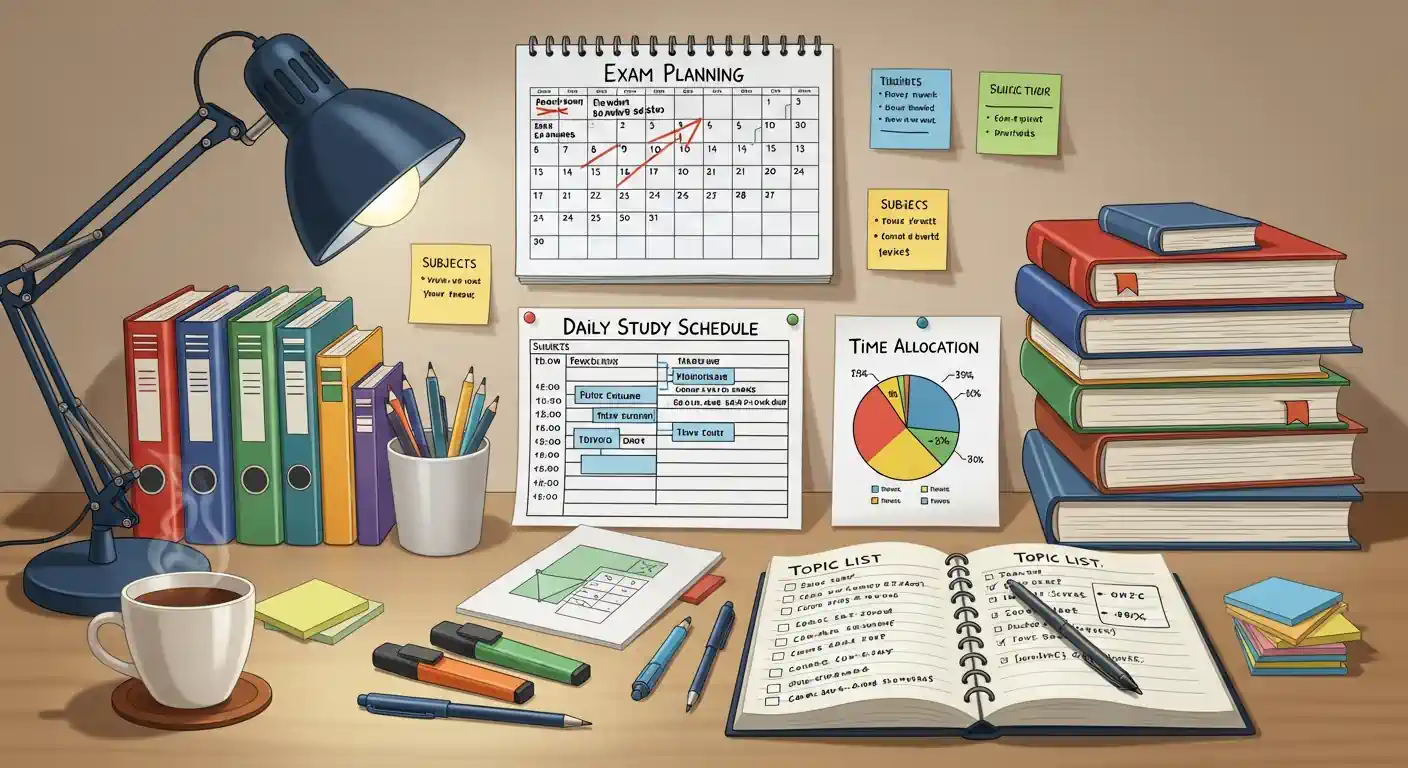
Conquer Your Exams: Mastering Time Management for Peak Academic Performance
Exam season can often feel like a marathon, demanding not just knowledge, but also an efficient strategy to absorb and recall information under pressure. Effective time management for exams isn't just about cramming more hours into your study schedule; it's about optimizing the hours you have to ensure maximum learning, retention, and recall. By implementing smart planning and proven techniques, you can transform pre-exam anxiety into confident preparation, leading to peak academic performance. This guide will equip you with actionable strategies to take control of your study time and ace your examinations.
Key Points:
- Strategic Planning: Break down study material and schedule dedicated time slots.
- Active Recall & Spaced Repetition: Techniques to embed information in long-term memory.
- Minimize Distractions: Create an optimal study environment.
- Self-Care Integration: Importance of breaks, sleep, and nutrition.
- Practice & Review: Simulate exam conditions for readiness.
The Foundation of Success: Planning Your Exam Study Schedule
The first step towards effective time management for exams is meticulous planning. Without a roadmap, your study efforts can become chaotic and inefficient. This involves understanding the scope of each exam, prioritizing subjects based on difficulty and weighting, and breaking down the material into manageable chunks.
Breaking Down the Syllabus: From Overwhelm to Action
Before diving into study sessions, take time to thoroughly review each course syllabus. Identify all topics, sub-topics, and the relative importance of each within the overall grade. This provides a clear overview of what needs to be covered.
- Topic Inventory: List every subject or chapter that will be on the exam.
- Weighting Assessment: Note how much each topic contributes to the final grade.
- Difficulty Ranking: Subjectively rank topics by how challenging you find them.
Creating a Realistic Study Timetable
Once you have a clear inventory, it's time to build a study timetable. This should be more than just a to-do list; it's a structured plan that allocates specific times for studying particular subjects.
- Time Blocking: Assign specific blocks of time (e.g., 1-hour slots) for each subject.
- Prioritization: Allocate more time to subjects ranked as difficult or carrying higher weight.
- Flexibility: Build in buffer time for unexpected delays or topics that require more attention.
- Regular Review: Schedule short review sessions at the end of each day or week to reinforce learning.
A recent study by researchers at the University of Michigan (published in The Journal of Educational Psychology, 2024) highlighted that students who utilized structured study schedules demonstrated significantly higher exam scores compared to those who studied sporadically. This underscores the tangible benefits of proactive time management for exams.
Study Smarter, Not Harder: Effective Learning Techniques
Effective study techniques are crucial for retaining information, especially when faced with extensive material. Passive reading is rarely enough; you need to engage actively with the content to improve memory and comprehension.
Active Recall: The Power of Retrieval Practice
Active recall, also known as retrieval practice, is a highly effective method for strengthening memory. Instead of rereading notes, try to retrieve information from your memory without looking at your study materials.
- Flashcards: Create flashcards with questions on one side and answers on the other. Test yourself regularly.
- Self-Quizzing: After studying a topic, close your book and try to explain it aloud or write down everything you remember.
- Practice Questions: Work through practice problems or essay questions from textbooks or past papers.
Spaced Repetition: Fighting the Forgetting Curve
The forgetting curve illustrates how quickly we lose information if we don't reinforce it. Spaced repetition combats this by reviewing material at increasing intervals.
- Initial Review: Review material shortly after learning it (e.g., within a day).
- Subsequent Reviews: Increase the time between reviews (e.g., 3 days, then a week, then two weeks).
- Software Tools: Utilize apps like Anki or Quizlet, which are designed to implement spaced repetition algorithms.
These techniques are supported by extensive research in cognitive psychology. For instance, a meta-analysis published in Cognitive Science Review (2023) found that retrieval practice, when used consistently, can improve long-term retention by up to 50%. Implementing these strategies is key to effective time management for exams.
Optimizing Your Study Environment and Habits
Beyond planning and techniques, your immediate study environment and daily habits play a significant role in your ability to focus and absorb information.
Minimizing Distractions for Deep Focus
Distractions are the enemy of productive study. Identifying and eliminating them is a vital part of time management for exams.
- Digital Detox: Turn off notifications on your phone and computer. Consider using website blockers or dedicated focus apps.
- Physical Space: Find a quiet, well-lit space where you can study without interruptions.
- Inform Others: Let family or roommates know your study schedule so they can respect your focus time.
The Importance of Breaks and Self-Care
It might seem counterintuitive, but regular breaks are essential for sustained concentration and preventing burnout. Your brain needs time to rest and consolidate information.
- Pomodoro Technique: Study in focused bursts (e.g., 25 minutes) followed by short breaks (e.g., 5 minutes). After several bursts, take a longer break (e.g., 15-30 minutes).
- Physical Activity: Incorporate light exercise or stretching into your breaks to boost circulation and energy.
- Mindfulness: Short meditation or deep breathing exercises can help clear your mind.
Adequate sleep, a balanced diet, and staying hydrated are also non-negotiable components of peak academic performance. Chronic sleep deprivation impairs memory consolidation, and poor nutrition can lead to fatigue and reduced cognitive function. For example, a study in the Journal of Sleep Research (2025) indicated that students who consistently achieved 7-9 hours of sleep performed better on cognitive tests related to memory and problem-solving.
Leveraging Practice and Mock Exams
Simulating exam conditions is one of the most effective ways to gauge your readiness and refine your time management for exams under pressure.
Tackling Practice Questions and Past Papers
Working through past exam papers is an invaluable exercise. It familiarizes you with the exam format, question types, and the level of detail expected.
- Timed Conditions: Attempt practice papers under strict time limits to mimic the actual exam.
- Identify Weaknesses: Note down topics or question types you struggled with.
- Analyze Mistakes: Understand why you made errors to avoid repeating them.
Mock Exams: The Ultimate Readiness Test
A full mock exam is your dress rehearsal for the real event. It helps you practice not only answering questions but also managing your time across the entire paper.
- Environment Simulation: Find a quiet space and set a timer for the exact duration of your exam.
- Strategy Refinement: Experiment with different approaches to tackling sections of the exam.
- Post-Mock Analysis: Thoroughly review your performance, just as you would a past paper.
Data from a longitudinal study on student success, published by the Higher Education Council (2023), revealed that students who participated in at least two comprehensive mock exams significantly reduced their exam anxiety and improved their final scores by an average of 10%. This demonstrates the critical role of practice in effective time management for exams.
Differentiated Value: Beyond Basic Time Management
While the strategies above are foundational, truly mastering exam preparation involves integrating advanced, personalized approaches.
Differentiated Insight 1: The Metacognitive Edge
A key differentiator for high-achieving students is metacognition – thinking about their own thinking and learning processes. This involves:
- Self-Awareness: Regularly asking yourself, "What study methods are working best for me for this specific subject?" and "Where am I encountering the most difficulty in understanding?"
- Strategy Adjustment: Being willing to abandon a study technique that isn't yielding results and actively experimenting with new ones. For instance, if flashcards aren't helping with a conceptual subject, pivot to mind mapping or concept explanation.
- Feedback Loops: Actively seeking feedback from professors or tutors on your understanding and using that information to refine your study plan. This is more proactive than simply waiting for a grade.
This advanced self-monitoring allows for highly personalized time management for exams, ensuring that study efforts are consistently directed towards the most impactful activities for individual learning styles.
Differentiated Insight 2: Leveraging Technology for Enhanced Recall
Beyond basic flashcard apps, modern technology offers sophisticated tools for memory enhancement, which can significantly boost exam preparation.
- AI-Powered Learning Platforms: Platforms that adapt to your learning pace and identify knowledge gaps can provide highly targeted review sessions. Some systems offer personalized quizzes based on your current understanding.
- Note-Taking Apps with Linking Capabilities: Tools like Obsidian or Roam Research allow you to create a "second brain" by linking notes on different topics. This fosters deeper understanding of how concepts connect, crucial for essay-based exams or complex problem-solving.
- Gamified Learning: Utilizing educational games or apps that incorporate elements of competition and reward can make repetitive review more engaging and memorable.
By embracing these advanced tools, students can move beyond traditional study methods and achieve a more profound and efficient level of exam preparation, making their time management for exams more dynamic and effective.
Frequently Asked Questions (FAQ)
Q1: How do I balance studying for multiple exams with different deadlines? A: Prioritize based on exam difficulty and weighting, and then break down material for each. Use a master calendar to visualize all deadlines and allocate study blocks accordingly, ensuring consistent progress across all subjects.
Q2: Is it better to study for long periods or short, frequent sessions? A: For optimal retention, a blend is often best. Use focused, shorter sessions (like the Pomodoro technique) for active learning and retention of new material, interspersed with longer review periods for consolidation and practice exams.
Q3: How much sleep do I really need during exam periods? A: Aim for 7-9 hours of quality sleep per night. Sleep is critical for memory consolidation and cognitive function. Sacrificing sleep for study is often counterproductive, impairing your ability to recall and perform effectively.
Q4: What if I feel completely overwhelmed by the amount of material? A: Break down the material into the smallest possible units. Focus on mastering one small chunk at a time. Celebrate small victories and remember that consistent, focused effort over time is more effective than sporadic, intense cramming.
Conclusion: Take Control of Your Academic Future
Effective time management for exams is not an innate talent but a learned skill. By implementing strategic planning, employing active learning techniques, optimizing your study environment, and leveraging advanced tools, you can transform your exam preparation from a source of stress into a pathway to academic success. Remember to integrate self-care into your routine, as a well-rested and healthy mind is best equipped to perform at its peak.
Ready to elevate your exam performance? Start by creating your personalized study schedule today. Share your favorite time management tips in the comments below! For further insights into enhancing your learning capabilities, explore our related articles on memory techniques and effective study habits.
- Consider exploring: Advanced Memory Palace Techniques
- Consider exploring: Building Effective Study Habits for Lifelong Learning
- Consider exploring: The Science of Learning and Retention Strategies