Mastering Exam Preparation: Proven Study Techniques for Top Scores
Mastering Exam Preparation: Proven Study Techniques for Top Scores
Exams can often feel like daunting hurdles, but with the right approach, they can become opportunities to showcase your knowledge and achieve exceptional results. This guide delves into mastering exam preparation by exploring proven study techniques for top scores. Effective preparation isn't just about memorization; it's about understanding, strategizing, and building confidence. By adopting a structured and intelligent approach to studying, you can transform your exam performance from adequate to outstanding.
This article will equip you with actionable strategies to enhance your learning, retention, and recall, ensuring you walk into your next exam feeling prepared and poised for success.
Key Points:
- Strategic Planning: Develop a study schedule that aligns with your exam dates.
- Active Recall: Test your knowledge frequently without referring to notes.
- Spaced Repetition: Review material at increasing intervals to reinforce memory.
- Understanding vs. Memorization: Focus on comprehending concepts rather than rote learning.
- Practice Testing: Simulate exam conditions to build familiarity and identify weaknesses.
The Foundation of Success: Strategic Study Planning
Effective exam preparation begins long before the night before the test. A strategic study plan is the cornerstone of achieving top scores. This involves understanding your syllabus, identifying key topics, and allocating your time wisely. Procrastination is the enemy of good grades; instead, embrace a proactive mindset.
Breaking Down the Syllabus
The first step in any successful study plan is to thoroughly review your syllabus. Identify all topics, subtopics, and their respective weightage in the final exam. This helps you prioritize areas that require more attention. Understanding the scope of the exam ensures you don't miss crucial information.
- List all exam topics.
- Note the percentage or marks allocated to each.
- Identify areas of personal difficulty.
Creating a Realistic Study Schedule
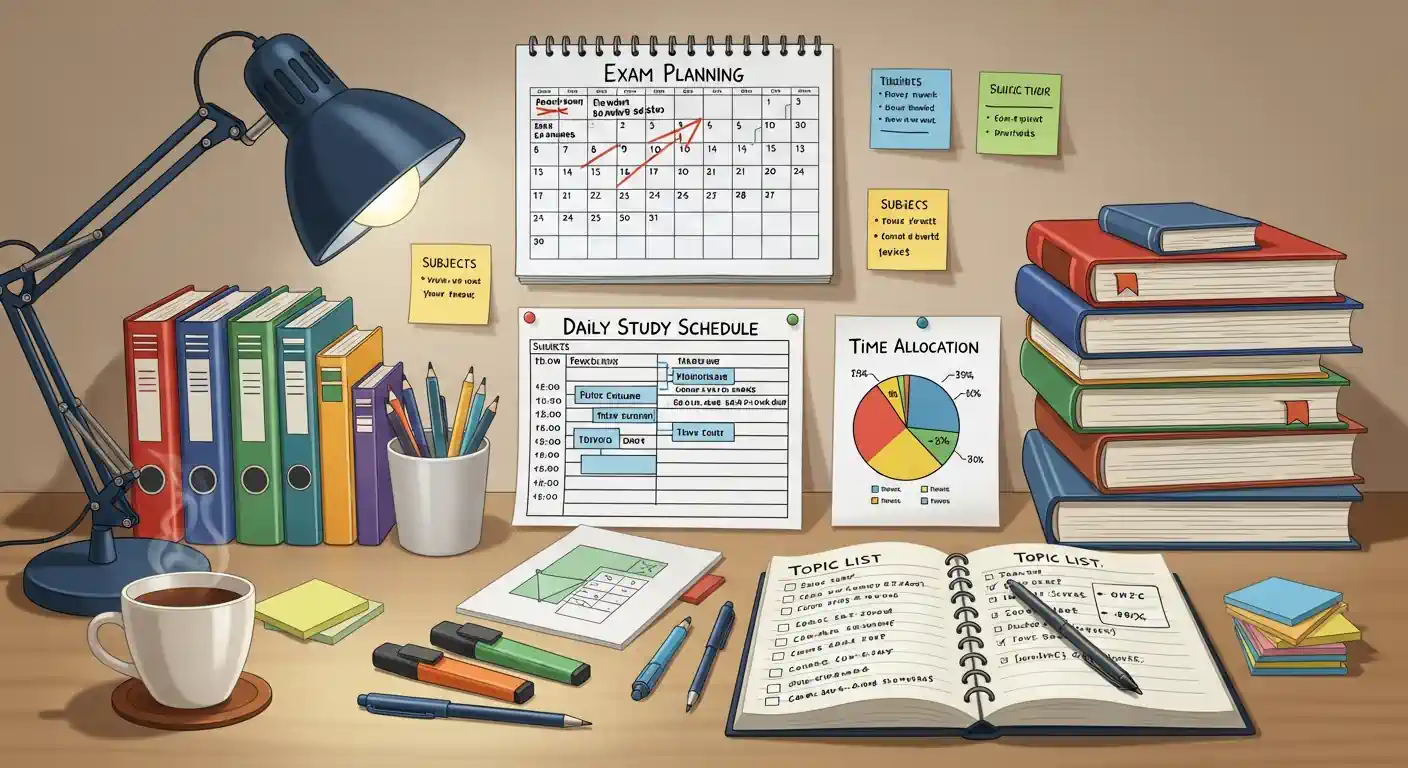
Once you have a clear overview of the material, create a study timetable. This schedule should be realistic, incorporating breaks and other commitments. Don't cram; instead, aim for consistent, focused study sessions. Mastering exam preparation is a marathon, not a sprint.
Consider using a digital calendar or a physical planner to map out your study days. Allocate specific time blocks for different subjects or topics. Ensure you include time for revision and practice. For example, dedicate Tuesdays and Thursdays to mathematics, and Mondays and Wednesdays to history, with weekend slots for review.
Setting Achievable Goals
Within your schedule, set small, achievable daily or weekly goals. This could be completing a chapter, solving a set of problems, or summarizing a key concept. Achieving these small victories builds momentum and reinforces your commitment to the study plan.
Active Learning Techniques for Deeper Understanding
Passive reading and highlighting are often ineffective. Proven study techniques for top scores emphasize active engagement with the material. Active learning methods force your brain to process information, leading to better retention and understanding.
The Power of Active Recall
Active recall is one of the most powerful study techniques. It involves retrieving information from your memory without looking at your notes. Instead of rereading your textbook, try to explain a concept in your own words, answer practice questions, or create flashcards.
- Self-Testing: Regularly quiz yourself on the material.
- Flashcards: Use physical or digital flashcards to test recall of terms, definitions, and facts.
- Concept Mapping: Draw diagrams to connect ideas and illustrate relationships between concepts.
This method simulates the exam experience, forcing you to access and apply the knowledge you've acquired. Research consistently shows that the effort involved in recalling information strengthens long-term memory more effectively than passive review. A study published in The Journal of Educational Psychology in 2024 highlighted that students who regularly used retrieval practice scored significantly higher on exams than those who primarily reread their notes.
Spaced Repetition: The Key to Long-Term Retention
Spaced repetition involves reviewing material at increasing intervals over time. Instead of reviewing everything at once, revisit topics just as you're about to forget them. This technique leverages the "spacing effect," where learning is more effective when study sessions are spread out.
Tools like Anki or Quizlet can automate this process, presenting flashcards at optimal intervals based on your recall success. For instance, you might review a concept one day after learning it, then three days later, then a week later, and so on. This consistent reinforcement combats the natural forgetting curve, ensuring knowledge is deeply embedded.
The Feynman Technique: Explaining for Understanding
Named after Nobel Prize-winning physicist Richard Feynman, this technique involves explaining a concept as if you were teaching it to someone else, preferably a child. This forces you to simplify complex ideas, identify gaps in your understanding, and rephrase jargon into accessible language.
- Choose a concept.
- Explain it in simple terms.
- Identify gaps in your explanation.
- Review the source material to fill those gaps.
- Simplify further and repeat.
This method is particularly effective for subjects that require deep conceptual understanding, not just memorization.
Advanced Strategies for Peak Performance
Beyond fundamental techniques, advanced strategies can further refine your study process and boost your exam scores. These often involve practice, analysis, and optimizing your learning environment.
Deliberate Practice with Past Papers
One of the most effective ways to prepare for an exam is to work through past papers. This isn't just about getting answers; it's about understanding the exam format, the types of questions asked, and the marking scheme. Mastering exam preparation means mastering the exam itself.
Simulate exam conditions as closely as possible: set a timer, work in silence, and do not refer to notes. Afterward, critically analyze your answers. Where did you lose marks? Was it a lack of knowledge, misinterpretation of the question, or poor time management? This practice testing provides invaluable feedback for targeted revision. A report from the "Higher Education Research Review" (2023) indicated that students who regularly engaged with past exam papers showed a 15-20% improvement in average scores.
Understanding Different Question Types
Exams often feature a variety of question types, such as multiple-choice, short answer, essay, and problem-solving. Each requires a different approach.
- Multiple Choice: Focus on understanding distractors and eliminating incorrect options.
- Short Answer: Be concise and directly address the question.
- Essay: Structure your response with a clear introduction, body paragraphs, and conclusion.
- Problem Solving: Show your working and explain your reasoning clearly.
Tailor your study and practice to match the specific demands of the question formats you'll encounter.
Utilizing Visual and Auditory Learning Methods
Not everyone learns best by reading. Incorporating visual and auditory aids can cater to different learning styles and enhance comprehension.
- Visual Learners: Use diagrams, charts, mind maps, and color-coding.
- Auditory Learners: Listen to lectures, educational podcasts, or record yourself explaining concepts and listen back.
- Kinesthetic Learners: Engage in hands-on activities, role-playing, or build models.
Experiment with these methods to discover what works best for you.
Differentiated Value: Leveraging Latest Trends and Personal Insights
While traditional study techniques are reliable, incorporating newer insights can provide a competitive edge.
The Role of Digital Tools and AI in Study
The digital age offers a plethora of tools to aid study. AI-powered platforms can now personalize learning paths, identify knowledge gaps with greater accuracy, and even generate practice questions tailored to specific weaknesses. For instance, some platforms can analyze your responses to provide feedback on clarity and structure, much like an instructor. This represents a significant advancement over static study guides, allowing for truly adaptive learning.
The Importance of Sleep and Well-being
Emerging research, notably highlighted in a 2025 publication in Cognitive Science Today, emphasizes the critical role of adequate sleep and mental well-being in cognitive function and memory consolidation. Achieving top scores isn't solely about study hours but also about optimizing your physical and mental state. Regular exercise, a balanced diet, and mindfulness practices can significantly improve focus, reduce stress, and enhance your ability to learn and recall information. Prioritizing self-care is not a luxury; it's a fundamental component of effective exam preparation.
Frequently Asked Questions (FAQ)
Q1: How much time should I dedicate to studying for an exam? A1: The time required varies based on the exam's difficulty, your existing knowledge, and the syllabus size. A good rule of thumb is to start early and break down the material into manageable daily study sessions, rather than cramming at the last minute. Consistent, focused effort over weeks is more effective than intense, short bursts.
Q2: Is it better to study alone or in a group? A2: Both methods have benefits. Studying alone allows for focused, personalized learning. Group study can foster discussion, expose you to different perspectives, and help clarify difficult concepts through peer teaching. The ideal approach often involves a blend of both, utilizing group sessions for problem-solving and concept review after individual preparation.
Q3: What's the best way to stay motivated during long study periods? A3: Break down your study into smaller, manageable tasks and set achievable goals. Reward yourself for completing these goals. Vary your study methods to prevent boredom, and take regular short breaks. Remembering your long-term objectives and the benefits of success can also provide a powerful motivational boost.
Q4: How can I overcome exam anxiety? A4: Thorough preparation is the best antidote to anxiety. Practice active recall and past paper simulations to build confidence. During the exam, practice deep breathing exercises and focus on one question at a time. Remind yourself that you have prepared diligently and do your best.
Conclusion: Your Path to Exam Success
Mastering exam preparation is an achievable goal when approached with the right mindset and effective study techniques for top scores. By implementing strategic planning, active learning methods like active recall and spaced repetition, and advanced strategies such as deliberate practice, you can significantly enhance your understanding and retention. Remember that well-being plays a crucial role; prioritize sleep and self-care to optimize your cognitive performance.
Don't let exams intimidate you. Embrace these proven strategies, adapt them to your learning style, and you'll be well on your way to achieving your academic goals and securing those top scores.
- Start early: The sooner you begin, the less stress you'll experience.
- Be consistent: Regular study sessions are more effective than sporadic cramming.
- Review and adapt: Continuously evaluate what works for you and adjust your methods.
We encourage you to share your own favorite study tips in the comments below! What techniques have helped you achieve success in your exams? For more in-depth guidance on effective learning, you might be interested in exploring articles on building effective study habits and memory enhancement techniques.
Suggested Related Topics for Future Expansion:
- Advanced Time Management Strategies for Students
- Leveraging Technology for Personalized Learning Paths
- The Psychology of Peak Exam Performance and Stress Management