How to Study Smarter: Essential Exam Prep Techniques
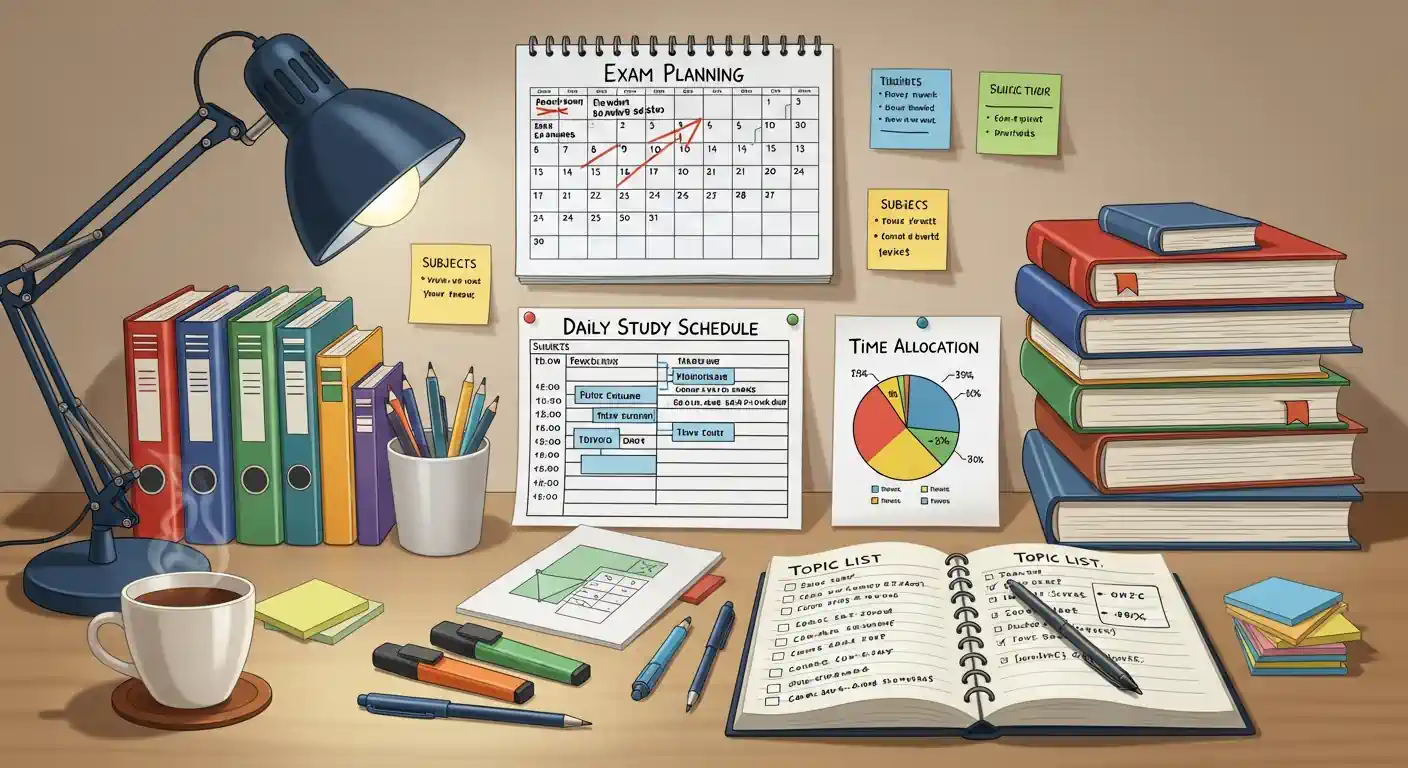
How to Study Smarter: Essential Exam Prep Techniques
Feeling overwhelmed by upcoming exams? The pressure to perform well can be immense, and many students fall into the trap of simply studying more, rather than studying smarter. This approach often leads to burnout and diminished results. Fortunately, there are highly effective strategies you can implement to prepare for your exams efficiently and effectively. This guide dives into essential exam prep techniques that will transform your study habits, boost your retention, and ultimately lead to better grades. By adopting these methods, you can conquer exam anxiety and approach your tests with confidence.
Key Points:
- Active Recall: Test yourself regularly to strengthen memory.
- Spaced Repetition: Review material at increasing intervals.
- Time Blocking: Schedule dedicated study sessions.
- Mind Mapping: Visually organize complex information.
- Self-Care: Prioritize sleep, nutrition, and breaks.
The Foundation: Understanding Your Learning Style and Goals
Before diving into specific techniques, it's crucial to understand how you learn best and what you aim to achieve. Identifying your learning style – whether you're a visual, auditory, kinesthetic, or reading/writing learner – can significantly impact the effectiveness of your study methods. For example, a visual learner might benefit more from diagrams and flashcards, while an auditory learner might find listening to lectures or discussing concepts aloud more helpful.
Furthermore, clearly defining your study goals for each subject is paramount. Are you aiming for a specific grade? Do you need to master a particular set of concepts? Setting SMART (Specific, Measurable, Achievable, Relevant, Time-bound) goals provides direction and motivation. This foundational step ensures that the techniques you choose are tailored to your individual needs and the demands of your specific exams. Understanding these elements allows you to study smarter from the outset.
Setting Up Your Study Environment for Success
Your physical and mental environment plays a significant role in your ability to focus and learn. Designate a quiet, well-lit study space free from distractions. This could be a corner of your room, a library carrel, or a dedicated desk. Ensure it’s organized and equipped with all the necessary materials – pens, paper, textbooks, laptop, and any required stationery.
Minimizing digital distractions is also vital. Turn off social media notifications, put your phone on silent, or even use website blockers if necessary. Consider the time of day you are most productive. For some, early mornings are best for concentration, while others are night owls. Experiment to find your peak productivity hours and schedule your most challenging study tasks during those times. A well-prepared environment is the first step in efficient exam preparation.
Mastering the Art of Active Learning
Passive learning, like simply rereading notes or highlighting text, is often inefficient. Active learning, on the other hand, involves engaging with the material in a way that requires your brain to process and retrieve information. This leads to deeper understanding and better long-term retention.
1. Active Recall: The Power of Testing Yourself
One of the most powerful techniques for how to study smarter is active recall. Instead of just rereading, actively try to retrieve information from your memory. This can be done through flashcards, practice questions, or simply quizzing yourself without looking at your notes.
- Flashcards: Write a question or term on one side and the answer or definition on the other. Test yourself regularly.
- Practice Tests: Use past papers or end-of-chapter questions to simulate exam conditions.
- Summarization: After reading a section, close your book and try to summarize the key points in your own words.
A study published in the Journal of Educational Psychology (2024) highlighted that students who used frequent retrieval practice scored significantly higher on exams than those who relied solely on re-reading. This demonstrates the efficacy of actively pulling information from memory.
2. Spaced Repetition: Fighting the Forgetting Curve
The forgetting curve illustrates how quickly we lose information if we don't revisit it. Spaced repetition combats this by reviewing material at increasing intervals. Initially, you might review notes shortly after learning them, then a day later, then a few days later, and so on.
Tools like Anki or Quizlet can automate this process with digital flashcards. By revisiting information just before you're likely to forget it, you strengthen the neural pathways associated with that memory, making it more robust and enduring. This technique is crucial for long-term retention, especially for subjects with vast amounts of information.
3. Elaboration and Explanation: Making Connections
Elaboration involves expanding on learned information by connecting it to existing knowledge or by explaining it in different ways. Ask yourself "why" and "how" questions about the material. Try to explain complex concepts to someone else (even an imaginary friend!). This forces you to simplify and clarify your understanding.
For instance, when studying history, connect events to their causes and consequences. In science, relate new theories to principles you already know. This deeper processing solidifies your understanding and makes the information more meaningful.
Strategic Planning and Time Management for Exams
Effective exam preparation isn't just about what you study, but also when and how you structure your study time. Poor time management is a common pitfall that leads to last-minute cramming and increased stress.
4. Time Blocking and Scheduling
Allocate specific blocks of time for studying each subject. This technique, known as time blocking, helps ensure that all subjects receive adequate attention and prevents procrastination. Create a study schedule that is realistic and takes into account other commitments, such as classes, work, and personal time.
- Break Down Large Tasks: Divide your study material into smaller, manageable chunks.
- Prioritize: Focus on areas where you are weakest or that carry the most weight in the exam.
- Include Breaks: Schedule short, regular breaks (e.g., 5-10 minutes every hour) to prevent burnout and maintain focus. A longer break of 30 minutes or more is also recommended every few hours.
5. The Pomodoro Technique: Focused Bursts of Study
The Pomodoro Technique is a popular time management method that uses timed work intervals, called Pomodoros, separated by short breaks. Typically, a Pomodoro is 25 minutes of focused work, followed by a 5-minute break. After four Pomodoros, you take a longer break (15-30 minutes). This method helps maintain concentration and prevents mental fatigue, making your study sessions more productive. This is a great way to combat procrastination and tackle subjects that feel daunting.
Advanced Techniques for Deeper Understanding
Beyond basic recall and scheduling, several advanced techniques can further enhance your exam preparation. These methods encourage critical thinking and a more nuanced understanding of the subject matter.
6. Mind Mapping and Visual Organization
Mind mapping is a powerful visual tool for organizing information. Start with a central topic and branch out with related subtopics, keywords, and ideas. Use colors, images, and concise phrases to create a visual representation of the entire subject.
Mind maps are excellent for:
- Brainstorming ideas
- Understanding relationships between concepts
- Summarizing large amounts of information
- Visualizing complex structures or processes
For a comprehensive overview of how to structure your learning visually, consider exploring resources on cognitive mapping techniques, which offer similar benefits in organizing complex information.
7. Teaching the Material to Others
As mentioned in elaboration, explaining concepts to others is an incredibly effective way to identify gaps in your own understanding. Choose a study partner or even pretend to teach a topic to an inanimate object. When you have to articulate a concept clearly and concisely, you're forced to organize your thoughts and identify any areas where your knowledge is fuzzy. This is a highly active form of learning and a key differentiator in preparing for exams.
8. Interleaving: Mixing Up Subjects
Instead of studying one subject for an entire session, try interleaving. This involves mixing different subjects or topics within a single study session. For example, after studying a chapter on algebra, you might switch to a history chapter before returning to another math problem.
While it might feel less productive initially, interleaving has been shown to improve long-term retention and the ability to distinguish between different concepts. It mimics real-world problem-solving, where you often encounter diverse challenges. Research from Princeton University (2023) has supported the benefits of interleaving for academic performance.
Differentiated Value: Latest Trends and Unique Insights
In today's rapidly evolving educational landscape, staying ahead means incorporating newer insights into your study regimen.
Embracing Digital Learning Tools Beyond Flashcards
While flashcards are excellent, consider exploring more dynamic digital tools. Interactive simulations, educational videos with quizzes, and collaborative online study platforms can offer a richer learning experience. For instance, platforms that use AI to adapt to your learning pace and identify your weak spots can be invaluable. A recent trend analysis in educational technology (2025) highlighted the growing impact of personalized learning platforms that leverage adaptive algorithms.
The Role of Metacognition in Study Success
Metacognition is "thinking about thinking." It involves being aware of your own learning process, understanding what strategies work best for you, and monitoring your progress. Before you start studying, ask yourself: "What do I already know about this topic?" During your study session, reflect: "Is this method working for me?" After studying, evaluate: "What did I learn, and what do I still need to work on?" Cultivating metacognitive skills is a hallmark of truly smart studying.
Essential Self-Care for Optimal Performance
You can have all the best study techniques, but without adequate self-care, your efforts will be compromised. Your brain and body need to be in optimal condition to learn and perform.
- Prioritize Sleep: Aim for 7-9 hours of quality sleep per night. Sleep is crucial for memory consolidation and cognitive function. Cramming all night is counterproductive.
- Nourish Your Body: Eat balanced meals and stay hydrated. Avoid excessive sugar and caffeine, which can lead to energy crashes.
- Incorporate Physical Activity: Regular exercise boosts blood flow to the brain, reduces stress, and improves mood. Even a short walk can make a difference.
- Manage Stress: Practice relaxation techniques like deep breathing, meditation, or mindfulness.
Frequently Asked Questions (FAQ)
Q1: How much time should I dedicate to studying for exams?
The amount of study time varies based on the subject's complexity and your personal learning pace. A general guideline is to allocate 2-3 hours of study for every hour of class time. However, focus on the quality and effectiveness of your study sessions rather than just the quantity of hours.
Q2: Is it better to study alone or in a group?
Both methods have benefits. Studying alone is great for focused, individual review and active recall. Group study is excellent for discussing complex topics, teaching each other, and gaining different perspectives. A balanced approach, incorporating both solo and group sessions, is often most effective.
Q3: How can I avoid burnout during exam preparation?
Burnout is a real risk. Combat it by scheduling regular breaks, prioritizing sleep and nutrition, engaging in physical activity, and taking time for enjoyable activities. Remember that consistent, smart study habits over time are more effective than intense, unsustainable cramming.
Q4: What if I'm struggling with a particular subject?
Don't hesitate to seek help. Talk to your professor or TA, form a study group focused on that subject, or consider hiring a tutor. Early intervention is key. Revisit fundamental concepts using different learning techniques, such as visual aids or simplified explanations.
Conclusion: Your Path to Smarter Studying
Mastering how to study smarter is an ongoing process of refinement. By incorporating active recall, spaced repetition, time blocking, and mindful self-care, you can transform your exam preparation from a stressful chore into an efficient and rewarding experience. Remember to tailor these techniques to your individual learning style and the demands of your coursework. Continuously evaluate what works best for you and be willing to adapt your strategies.
What are your go-to study techniques? Share your tips and experiences in the comments below!
For further insights into optimizing your academic performance, consider exploring our related articles on effective note-taking strategies and overcoming test anxiety.
This article was last updated on January 23, 2026. We recommend reviewing and updating study strategies annually to incorporate the latest research and best practices.