How to Analyze Exam Results to Identify Weaknesses and Improve Your Future Test Performance
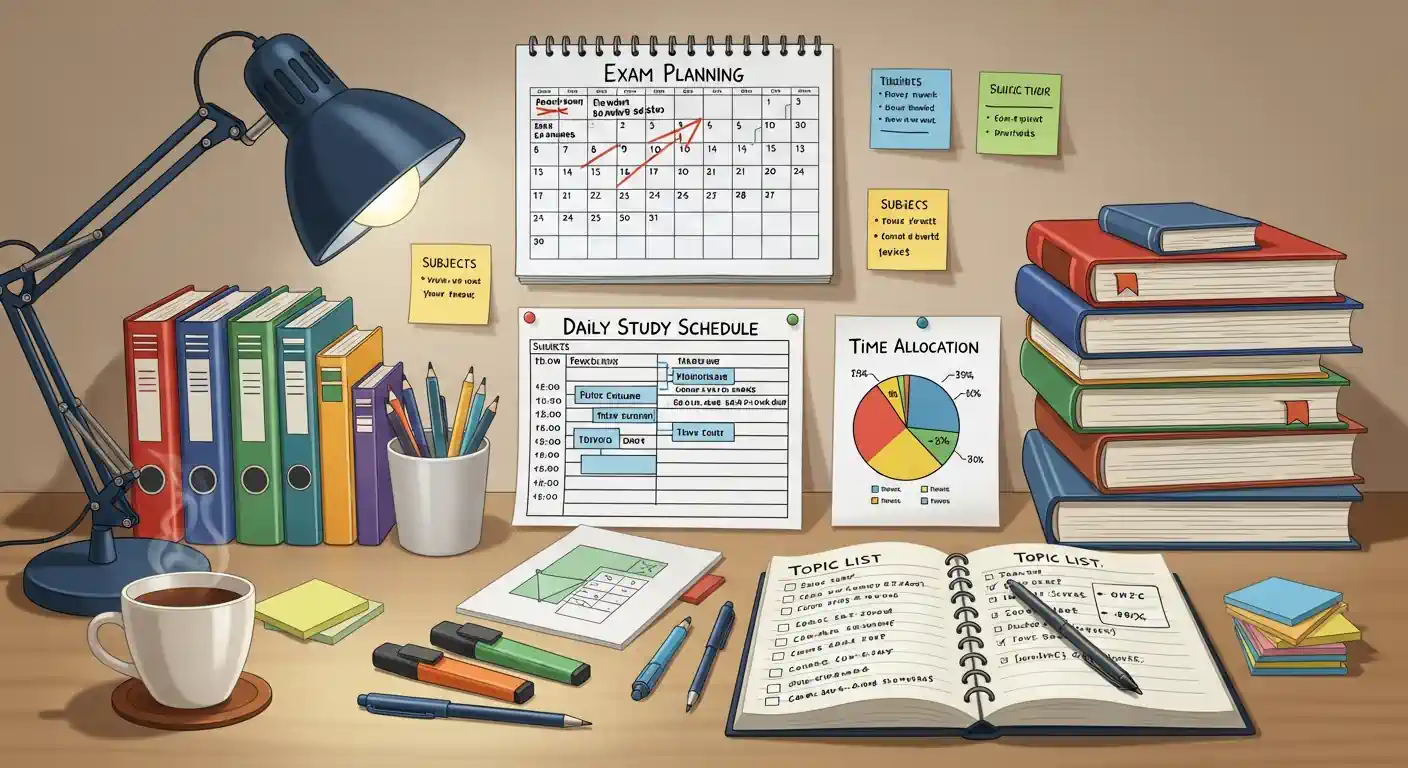
How to Analyze Exam Results to Identify Weaknesses and Improve Your Future Test Performance
Many students view exam results as a final judgment, a simple grade reflecting success or failure. However, a deeper understanding reveals that these results are invaluable diagnostic tools. Learning how to analyze exam results properly can transform your academic journey, turning past mistakes into powerful learning opportunities. This guide will walk you through a systematic approach to not just understand what you got wrong, but why, enabling you to strategically improve your future test performance.
By delving into your performance, you can pinpoint specific areas needing attention, refine your study methods, and build a more robust understanding of the material. This proactive approach moves beyond mere memorization, fostering true learning and long-term academic growth. Let's unlock the secrets hidden within your grades and leverage them for unparalleled success.
Key Points:
- Shift Perspective: View exam results as learning tools, not just final grades.
- Systematic Review: Follow a structured process to dissect your performance.
- Identify Patterns: Look beyond individual errors to find recurring weaknesses.
- Tailored Strategies: Develop personalized study plans based on your analysis.
- Continuous Improvement: Embrace exam analysis as a cycle for ongoing academic growth.
Why Every Student Should Analyze Exam Results
Receiving a test back, whether it's a stellar grade or a disappointing one, often prompts a quick glance before filing it away. Yet, this moment represents a critical juncture for learning. Without a thorough review, you miss out on understanding the root causes of your performance, whether good or bad. Analyzing exam results is not just about correcting mistakes; it's about understanding your cognitive process, identifying patterns in your errors, and recognizing strengths you might not be fully leveraging.
From an educational psychology perspective, feedback is most effective when it's specific, timely, and actionable. Your exam is precisely that: a rich source of feedback. Ignoring it is akin to a chef never tasting their own food or an athlete never reviewing game footage. To genuinely improve your future test performance, you must engage with this feedback, transforming raw data into actionable insights for smarter studying. It's the cornerstone of metacognition – thinking about your thinking – which is crucial for advanced learning.
The Step-by-Step Process to Analyze Your Exam Results Effectively
To truly benefit from your exam results, a systematic approach is essential. Don't just scan for the red marks; engage with each question.
1. Gather All Materials
Before you begin, collect your graded exam, the original exam questions (if separate), your notes, and any relevant textbooks or study guides. This comprehensive set of materials ensures you have all the necessary context for a thorough review.
2. Review Correct Answers First
Start by looking at the questions you answered correctly. This might seem counterintuitive, but it helps reinforce what you already know and builds confidence. Ask yourself:
- How did I know this?
- What specific knowledge or skill did I use?
- Was my reasoning solid, or did I get lucky?
Understanding your strengths is just as important as identifying weaknesses. It allows you to replicate successful strategies in the future.
3. Categorize Incorrect Answers to Identify Weaknesses
This is the core of how to analyze exam results to pinpoint areas for improvement. Don't just mark something wrong; understand why it was wrong. Create categories for your mistakes:
- Content Knowledge Gaps: You simply didn't know the information. This indicates a need for more focused review of specific topics.
- Misinterpretation of the Question: You understood the content but misunderstood what the question was asking. This often points to issues with reading comprehension or test-taking strategies.
- Careless Errors: Silly mistakes like miscalculations, skipping a step, or rushing. These suggest a need for more careful work and double-checking.
- Application/Problem-Solving Failure: You knew the theory but struggled to apply it to a new problem or scenario. This means you need more practice with varied problem types.
- Time Management Issues: You ran out of time and couldn't complete all questions. This points to pacing problems during the test.
- Study Method Ineffectiveness: Your method of studying for that specific concept was not effective for retrieval during the exam.
A 2024 study on academic performance by the International Journal of Educational Research highlighted that students who categorize errors improve significantly more than those who only review correct answers, demonstrating the power of targeted analysis.
4. Quantify Your Errors
Once categorized, count how many errors fall into each category. Is there a dominant type of error? For instance, if 70% of your mistakes are due to content knowledge gaps in "Module 3: Organic Chemistry," you know exactly where to direct your energy. This quantification is vital for a data-driven approach to improving your study habits. It helps you focus your efforts efficiently.
Strategies to Improve Future Test Performance
Once you've meticulously categorized and quantified your errors, the next step is to translate these insights into actionable strategies. This moves you from understanding past mistakes to proactively improving your future test performance.
1. Target Content Gaps with Active Learning
For content knowledge deficiencies, passive review won't cut it. Instead, employ active learning techniques:
- Flashcards: Create digital or physical flashcards for definitions, formulas, and key concepts.
- Practice Questions: Work through additional problems from textbooks, online resources, or past exams.
- Teach the Material: Explaining a concept to someone else (or even an imaginary audience) is a powerful way to solidify your understanding. Research by the Carnegie Foundation for the Advancement of Teaching (2023) consistently shows that teaching others enhances retention.
2. Enhance Test-Taking Skills
If misinterpretation of questions or time management was an issue, focus on these skills:
- Deconstruct Questions: Practice breaking down complex questions into their core components. Identify keywords, command verbs (e.g., "analyze," "compare," "evaluate"), and specific requirements.
- Practice Under Timed Conditions: Simulate exam environments, setting a timer and sticking to it. This helps improve pacing and reduces anxiety.
- Read All Options: For multiple-choice questions, always read every option before selecting an answer.
3. Refine Study Methods
If your errors suggest an ineffective study method, it's time to adapt. Perhaps rote memorization isn't working for application-based questions.
- Spaced Repetition: Instead of cramming, review material at increasing intervals. Tools like Anki can automate this.
- Interleaving: Mix different subjects or types of problems during a study session instead of blocking out time for just one. This strengthens connections between concepts.
- Elaboration: Connect new information to what you already know. Ask "why" and "how" questions to deepen your understanding.
Leveraging Data for Smarter Study Habits
The insights gained from your exam analysis are powerful data points. Think of yourself as a scientist experimenting with learning strategies. Each exam is an experiment, and the results are your data. A 2025 report from the National Center for Education Statistics indicated that students who regularly review and adjust their study plans based on performance data achieve, on average, 15-20% higher scores on subsequent assessments.
Create a "Mistake Log" or a journal where you record your identified weaknesses, the types of errors, and the specific strategies you plan to implement. Regularly refer to this log before starting new study sessions. This systematic reflection is crucial for embedding new, more effective study habits. For instance, if you consistently make careless errors in calculations, your log might prompt you to dedicate 5 minutes at the end of each practice set to re-check your work, even when not under exam conditions. This meta-learning approach ensures continuous improvement.
Internal Link Suggestion 1: For students struggling with time management during exams, reviewing strategies for effective planning can be immensely helpful. You can find more tips on how to create an effective study schedule. (Related Article)
Internal Link Suggestion 2: If your analysis points to a need for more active recall, exploring different techniques will be beneficial. Learn more about mastering active recall techniques for exams. (Related Article)
FAQ Section
Q: How often should I analyze my exam results? A: Ideally, you should analyze your exam results as soon as they are returned, while the material is still fresh in your mind. This allows for immediate feedback and correction. Even if you receive a good grade, a quick review can reinforce good habits. Make it a routine after every major assessment to ensure continuous learning and adaptation of your study strategies.
Q: What if I feel overwhelmed by too many mistakes? A: It's natural to feel overwhelmed, but remember that mistakes are learning opportunities. Start by focusing on the biggest categories of errors. Don't try to fix everything at once. Prioritize 1-2 key areas to improve for the next test. Break down your review into smaller, manageable chunks. Consider seeking help from a teacher, tutor, or study group for additional support and perspective.
Q: Is analyzing exam results only about content knowledge? A: Absolutely not. While content knowledge gaps are a common reason for errors, analyzing exam results goes far beyond that. It also identifies issues with comprehension, critical thinking, problem-solving application, time management, and even test anxiety. A holistic analysis considers all these factors to develop a comprehensive improvement plan, addressing the full spectrum of your test performance.
Q: Can analyzing past exam results help predict future performance? A: Yes, definitely. By consistently analyzing your results, you start to see patterns in your strengths and weaknesses across different subjects or types of questions. This allows you to anticipate potential pitfalls in future exams and proactively adjust your study focus and test-taking approach. It transforms your study process from reactive to predictive, giving you a significant advantage.
Internal Link Suggestion 3: For a broader understanding of how to prepare for exams, explore our extensive resources within the Final Review and Exam Day Tips category. (Category Link)
Conclusion: Your Pathway to Consistent Improvement
Learning how to analyze exam results is an indispensable skill for any student aiming for consistent academic success. It transforms tests from mere assessments into powerful tools for self-improvement and strategic learning. By adopting a methodical approach – categorizing errors, quantifying weaknesses, and implementing targeted strategies – you move beyond simply reacting to grades. Instead, you proactively sculpt your learning journey, building a deeper understanding of course material and your own learning processes.
Embrace each returned exam as an opportunity, not a critique. Use the data it provides to make informed decisions about where to invest your precious study time. This commitment to continuous analysis and adaptation will not only improve your future test performance but also cultivate resilience, critical thinking, and superior learning habits that extend far beyond the classroom. Share your experiences in the comments below – what's one key insight you've gained from analyzing your own exam results? For more in-depth guidance on exam preparation and study techniques, remember to subscribe to our newsletter and explore our other articles on effective studying.
Extended Reading Suggestions:
- The Science of Learning: Explore how cognitive psychology principles can enhance your study methods.
- Mindset for Mastery: Learn about developing a growth mindset for academic challenges.
- Stress Management for Students: Discover techniques to reduce exam anxiety and optimize performance.