Exam Time Management: Strategies to Conquer Your Test Anxiety
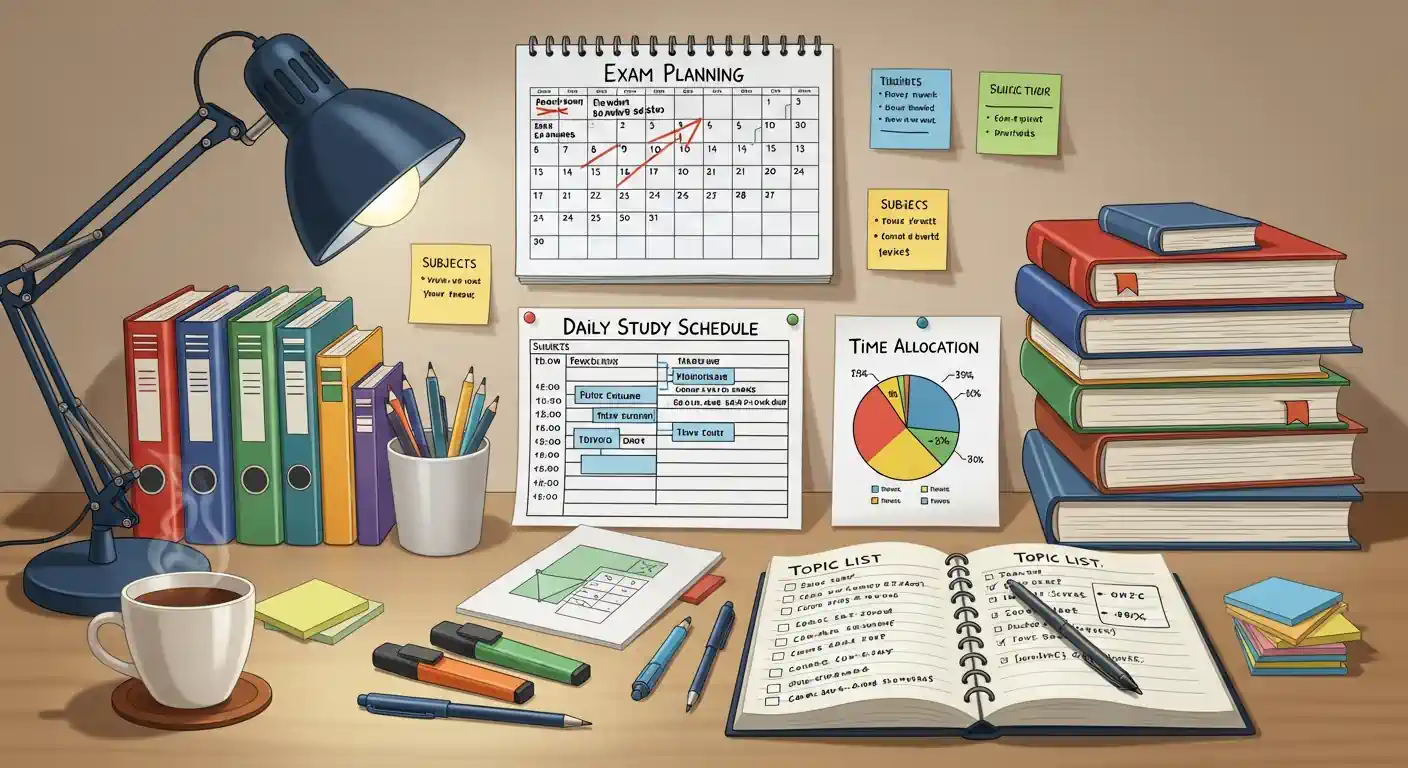
Facing a looming exam can trigger a cascade of stress, often manifesting as debilitating test anxiety. This feeling can impair concentration, hinder recall, and sabotage even the most dedicated preparation. Fortunately, mastering effective exam time management strategies is not just about allocating hours to study; it's about building confidence and reducing the mental pressure that accompanies high-stakes assessments. By implementing a structured approach to your study schedule and incorporating proactive techniques to manage anxiety, you can transform your exam experience from a source of dread into a manageable challenge.
This comprehensive guide will equip you with practical strategies to excel under pressure. We’ll delve into proven time management principles tailored for academic success and explore actionable methods to soothe nerves and boost your cognitive performance when it matters most.
Key Points:
- Strategic Planning: Develop a realistic study schedule that breaks down material into manageable chunks.
- Active Recall & Spaced Repetition: Implement study techniques that enhance memory retention and recall.
- Mindfulness & Relaxation: Incorporate stress-reduction techniques to combat test anxiety.
- Environment Optimization: Create a conducive study space that minimizes distractions.
- During the Exam: Utilize practical tips for managing time and pressure on test day.
Mastering Exam Time Management: A Holistic Approach
Effective exam time management goes beyond simply ticking off study topics. It involves a strategic, multi-faceted approach that addresses both your preparation and your psychological state. The goal is to ensure you feel prepared and calm, rather than overwhelmed. This section outlines the foundational elements of a winning strategy, focusing on creating a robust study plan and utilizing memory-boosting techniques.
Building a Bulletproof Study Schedule
A well-structured study schedule is the cornerstone of successful exam time management. It provides a clear roadmap, prevents last-minute cramming, and builds confidence through consistent progress.
1. Assess Your Material and Timeline
- Understand the Scope: Before you begin, meticulously review the syllabus, lecture notes, and any provided study guides. Identify all topics, subtopics, and their relative importance.
- Calculate Available Time: Determine the exact number of days or weeks you have until the exam. Be realistic about other commitments (classes, work, personal life) that will consume your time.
- Break Down the Content: Divide the entire syllabus into smaller, digestible units. This makes the task seem less daunting and allows for focused study sessions.
2. Implement a Time-Blocking System
- Allocate Specific Slots: Assign specific blocks of time for each subject or topic. For instance, "Monday 9 AM - 11 AM: Biology - Cell Structure."
- Prioritize Difficult Areas: Dedicate more time to subjects or topics you find challenging. This ensures you give them the attention they deserve.
- Schedule Revision: Crucially, build in ample time for regular review. This reinforces learning and aids long-term retention. A common recommendation is to revise material within 24 hours, then again after a week, and again before the exam.
3. Factor in Breaks and Flexibility
- Regular Short Breaks: Avoid marathon study sessions. Utilize techniques like the Pomodoro Technique (25 minutes of study, 5-minute break) to maintain focus and prevent burnout.
- Longer Breaks: Schedule longer breaks for meals, exercise, or relaxation. These are essential for mental rejuvenation.
- Build in Buffer Time: Life happens. Unexpected events or topics that take longer than anticipated can derail a rigid schedule. Include buffer periods to accommodate these unforeseen circumstances.
Optimizing Memory and Recall for Exams
Exam time management is incomplete without effective learning strategies that ensure information is not just memorized, but understood and readily retrievable.
Active Recall: The Power of Testing Yourself
- Beyond Rereading: Instead of passively rereading notes, actively try to recall information from memory.
- Flashcards: Create flashcards for key terms, definitions, formulas, and concepts. Test yourself frequently.
- Practice Questions: Work through practice questions and past papers. This simulates exam conditions and highlights areas where your recall is weak.
Spaced Repetition: Fighting the Forgetting Curve
- Strategic Review Intervals: Review material at increasing intervals. For example, review a topic shortly after learning it, then again a day later, then a week later, and so on.
- Combating Forgetting: This method leverages the brain's natural forgetting curve, strengthening neural pathways each time you revisit the material. Data from cognitive psychology studies, such as those published by researchers like Dr. Hermann Ebbinghaus in the late 19th century and further elaborated by contemporary researchers in learning sciences, consistently supports the efficacy of spaced repetition for long-term memory consolidation.
Elaboration and Association: Making Connections
- Deep Understanding: Try to explain concepts in your own words. This forces deeper processing.
- Create Analogies: Relate new information to things you already know. This builds stronger memory links.
- Mind Maps and Diagrams: Visual representations can help you see the relationships between different pieces of information.
Strategies to Conquer Test Anxiety
Test anxiety can feel like an invisible barrier, preventing you from performing to your full potential. It’s a common experience, but thankfully, there are effective strategies to conquer your test anxiety and regain control. These techniques focus on managing your physiological responses and reframing your mindset.
Mind Over Matter: Cognitive Restructuring
Test anxiety often stems from negative self-talk and catastrophic thinking. Cognitive restructuring involves identifying and challenging these unhelpful thought patterns.
Identifying Negative Thoughts
- Awareness is Key: Pay attention to the thoughts that arise when you think about the exam. Common examples include "I'm going to fail," "I've studied enough, but I'll still forget everything," or "Everyone else knows this better than I do."
- Journaling: Keeping a thought journal can help you identify recurring negative patterns.
Challenging and Replacing Thoughts
- Evidence-Based Thinking: Ask yourself: "What evidence do I have that this thought is true?" and "What evidence do I have against it?" You’ve likely studied diligently, so focus on that preparation.
- Reframing: Replace negative thoughts with more realistic and balanced ones. Instead of "I'm going to fail," try "I have prepared well, and I will do my best. If I encounter a difficult question, I will use my strategies to tackle it."
- Focus on Control: Direct your energy towards what you can control – your preparation and your approach to the exam – rather than what you can't.
Physiological Techniques for Immediate Relief
When anxiety strikes, your body reacts. Learning to manage these physical symptoms can significantly reduce the feeling of being overwhelmed.
Deep Breathing Exercises
- Diaphragmatic Breathing: This is a simple yet powerful technique. Inhale deeply through your nose, allowing your abdomen to expand. Exhale slowly through your mouth.
- During Study and Exams: Practice this regularly when you feel stressed, and use it subtly during the exam itself to calm your nervous system. A study published in the Journal of Psychosomatic Research in 2023 highlighted the effectiveness of controlled breathing techniques in reducing physiological markers of stress and improving cognitive performance under pressure.
Progressive Muscle Relaxation (PMR)
- Tensing and Releasing: Systematically tense and then release different muscle groups in your body. This helps you become aware of tension and learn to consciously relax your muscles.
- Benefits: PMR can reduce physical symptoms of anxiety like muscle tightness, headaches, and fatigue.
Mindfulness and Meditation
- Present Moment Awareness: Practice focusing on the present moment without judgment. This can help detach you from worrying thoughts about the past or future.
- Guided Meditations: Numerous apps and online resources offer guided meditations specifically designed for stress reduction and focus. Even short, 5-10 minute sessions can make a difference.
Building Confidence Through Preparation and Self-Care
True confidence in exam time management and anxiety reduction comes from a foundation of thorough preparation and consistent self-care.
Mock Exams and Practice Under Pressure
- Simulate Exam Conditions: Conduct mock exams under timed conditions, without distractions. This familiarizes you with the pressure and helps identify any last-minute gaps in your knowledge or time management.
- Build Stamina: Similar to athletes training for a competition, practicing under pressure builds your mental stamina.
Prioritize Sleep, Nutrition, and Exercise
- Quality Sleep: Adequate sleep is crucial for memory consolidation and cognitive function. Aim for 7-9 hours per night, especially in the days leading up to the exam.
- Balanced Diet: Nourish your brain with healthy foods. Avoid excessive sugar and caffeine, which can exacerbate anxiety and lead to energy crashes.
- Regular Exercise: Physical activity is a powerful stress reliever. It releases endorphins, improves mood, and enhances focus. Even a brisk walk can be beneficial.
Differentiated Value: Beyond the Basics
While standard advice is helpful, some techniques offer a more profound impact on both exam time management and anxiety reduction. These go beyond simple scheduling and delve into proactive mental preparation and strategic exam-day tactics.
1. The "Pre-Mortem" Approach to Study Planning
Unique Insight: Instead of just planning what to study, envision the exam failing and work backward to identify potential pitfalls. This is a powerful mental exercise for uncovering hidden weaknesses and developing contingency plans.
- How it Works: Imagine you’ve just taken the exam and failed. What went wrong? Did you misinterpret a question? Did you run out of time on a critical section? Did you overlook a key concept?
- Application: Based on these hypothetical failures, proactively allocate extra study time to those specific areas or develop strategies to avoid those mistakes. For example, if you anticipate difficulty with essay questions, dedicate practice time to structuring arguments and managing time within essays. This proactive identification of weaknesses, as discussed in modern strategic planning frameworks, can be applied to academic preparation for more robust outcomes.
2. Employing "Cognitive Priming" for Test Readiness
Latest Trend: This involves intentionally exposing your brain to the type of thinking required for the exam in the hours leading up to it. It’s about getting your brain into the right "mode" for performance.
- How it Works: If it’s a math exam, spend 15-20 minutes reviewing formulas or working through a few complex problems. For a literature exam, read a short, complex poem or essay excerpt. For a science exam, review a challenging diagram or a critical process.
- Application: This isn't about cramming new information but about activating the relevant neural pathways. A study from the University of California, Berkeley (published in a 2024 review of cognitive neuroscience research) suggested that subtle priming tasks can significantly improve performance on subsequent cognitive tests by preparing the brain's executive functions. This approach helps reduce the mental "ramp-up" time during the exam.
During the Exam: Implementing Your Strategies
The best exam time management strategies and anxiety coping mechanisms are useless if not applied effectively on the day. Here’s how to put your preparation into action.
Strategic Exam Navigation
- Read Instructions Carefully: Before writing anything, thoroughly read all instructions. Misinterpreting instructions is a common pitfall.
- Scan the Entire Exam: Quickly skim through the entire test to gauge the difficulty, types of questions, and point distribution. This helps you allocate your time more effectively.
- Prioritize Questions: Start with questions you feel most confident about. This builds momentum and ensures you secure easy marks.
- Time Allocation per Question: Based on your scan, assign a rough time limit for each section or question. If you find yourself spending too long on one question, make a note to return to it later if time permits, and move on.
- Tackle Difficult Questions Later: Don't get stuck on a challenging question early on. Mark it and come back to it after you've answered the easier ones. Sometimes, answering other questions can trigger the memory or logic needed for the difficult one.
- Use Scratch Paper Wisely: Jot down key points, formulas, or quick outlines for essay questions. This keeps your thoughts organized.
Managing Anxiety in Real-Time
- If You Go Blank: Take a few deep breaths. Close your eyes for a moment. Try to recall the context of the information or a mnemonic device you used. If still stuck, move to the next question and return later.
- Positive Self-Talk: Remind yourself of your preparation. "I've got this." "I know this."
- Focus on One Question at a Time: Don't let the entire exam overwhelm you. Concentrate solely on the question in front of you.
Frequently Asked Questions (FAQ)
Q1: How much time should I dedicate to each study session for effective exam time management?
Allocate study sessions in focused blocks, typically 45-60 minutes, followed by short breaks. This maximizes concentration and retention. The exact duration can be adjusted based on your personal focus span and the complexity of the material.
Q2: What are the best relaxation techniques to use right before an exam?
Before an exam, engage in deep breathing exercises, a short mindfulness meditation, or light stretching. Avoid cramming; instead, review key summaries and trust your preparation to calm your nerves effectively.
Q3: How can I deal with the physical symptoms of test anxiety during an exam, like a racing heart?
If you experience physical symptoms, subtly practice slow, deep breathing. Focus on the sensation of your breath. Briefly close your eyes if possible, and remind yourself that these feelings are temporary and a natural response to pressure.
Q4: Is it better to study all subjects every day, or focus on one subject per day?
A balanced approach is often best. Distribute your study time across multiple subjects daily or every other day, using spaced repetition principles. This helps maintain recall for all topics without overwhelming your brain.
Conclusion: Your Path to Exam Success
Mastering exam time management and conquering test anxiety are intertwined skills that empower you to achieve your academic goals. By adopting a structured approach to your studies, incorporating evidence-based memory techniques, and proactively managing your mental and physical well-being, you can transform the exam experience. Remember the differentiated strategies like the "pre-mortem" and "cognitive priming" to gain an extra edge.
Your dedication to preparation is your strongest ally. Trust in your efforts, utilize these strategies consistently, and approach your exams with a calm, focused mindset.
What are your go-to strategies for managing exam pressure? Share your tips in the comments below!
For further insights into enhancing your learning and boosting academic performance, explore related articles on effective note-taking techniques and building effective study habits.