Building Confidence for Exams: Achieve Your Best Performance
Building Confidence for Exams: Achieve Your Best Performance
Facing exams can be a daunting experience, often accompanied by stress and self-doubt. However, building confidence for exams is not just about knowing the material; it's about cultivating a resilient mindset that allows you to perform at your peak. This article explores practical, evidence-based strategies to help you conquer exam anxiety, enhance your self-belief, and ultimately achieve your best performance. By understanding the psychological underpinnings of confidence and implementing targeted techniques, you can transform your exam experience from one of dread to one of empowered readiness.
Key Points for Boosting Exam Confidence:
- Strategic Preparation: Go beyond rote memorization to truly understand concepts.
- Mindset Mastery: Cultivate positive self-talk and challenge negative thoughts.
- Stress Management: Implement relaxation techniques to calm your nervous system.
- Visualization Practice: Mentally rehearse success to build self-efficacy.
- Post-Exam Reflection: Learn from every experience to foster growth.
Understanding the Psychology of Exam Confidence
Confidence isn't merely a feeling; it's a belief in one's ability to succeed. For exams, this translates into trusting your preparation and your capacity to recall and apply knowledge under pressure. A strong sense of self-efficacy, as defined by psychologist Albert Bandura, is crucial for building confidence for exams. It empowers you to approach challenges with determination rather than avoidance.
Conversely, a lack of confidence can trigger test anxiety, leading to mental blocks, poor concentration, and underperformance. This often stems from a fear of failure or a perception of inadequacy. Addressing these underlying psychological factors is the first step toward developing robust exam confidence. Understanding that confidence is a skill, not an inherent trait, allows for deliberate cultivation.
Strategic Preparation: The Foundation of Exam Confidence
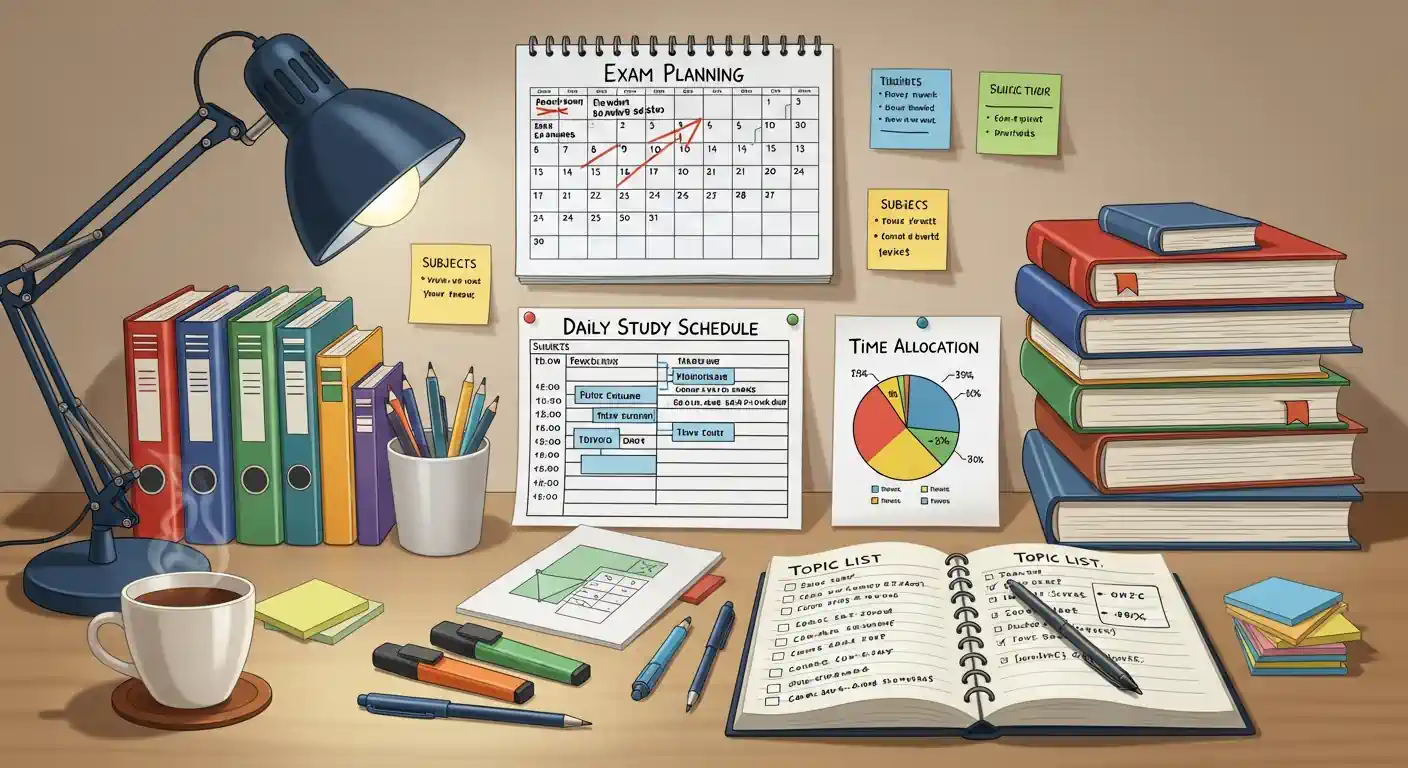
Effective preparation is the bedrock of building confidence for exams. It's not just about spending hours studying, but about studying smart. A well-structured study plan ensures comprehensive coverage and reduces last-minute panic. This proactive approach significantly diminishes uncertainty, a major contributor to anxiety.
Crafting an Effective Study Plan
- Break Down Material: Divide large topics into smaller, manageable chunks. This makes the task less overwhelming and provides a sense of progress.
- Active Recall: Instead of passively rereading notes, actively test yourself. Flashcards, self-quizzing, and explaining concepts aloud are powerful methods.
- Spaced Repetition: Review material at increasing intervals over time. This strengthens memory retention and prevents cramming.
- Practice Past Papers: Familiarize yourself with the exam format, question types, and time constraints. This simulation builds comfort and reduces surprises.
- Identify Knowledge Gaps: Be honest about what you don't know and dedicate extra time to those areas. A 2023 report by the National Education Research Council highlighted that targeted revision of weak areas significantly boosts student self-efficacy.
Mastering Your Mindset: Cultivating Positive Self-Talk
Your internal dialogue plays a profound role in building confidence for exams. Negative self-talk can erode your belief in yourself, while positive affirmations can empower you. Challenging unhelpful thoughts is a critical skill for maintaining composure.
Techniques for a Confident Mindset
- Identify Negative Thoughts: Become aware of self-critical statements like "I'm going to fail" or "I can't do this." Recognize them as just thoughts, not facts.
- Reframe and Replace: Transform negative thoughts into constructive ones. Instead of "I can't do this," try "I will do my best, and I am capable of learning."
- Positive Affirmations: Regularly repeat positive statements about your abilities and preparation. For example, "I am well-prepared and ready to succeed."
- Focus on Effort, Not Just Outcome: Emphasize the effort you've put in, rather than solely fixating on the final grade. This reduces pressure and fosters a growth mindset.
- Mindfulness and Presence: Practice being present in the moment rather than dwelling on past mistakes or future anxieties. Simple breathing exercises can help anchor you.
Effective Stress Management for Peak Performance
Even with thorough preparation, stress can undermine your performance. Learning to manage stress effectively is integral to building confidence for exams. It ensures your mind remains clear and focused when it matters most.
Proven Stress Reduction Strategies
- Deep Breathing Exercises: Before and during an exam, take slow, deep breaths. Inhale for four counts, hold for four, and exhale for six. This activates the parasympathetic nervous system, promoting calm.
- Progressive Muscle Relaxation: Tense and then relax different muscle groups throughout your body. This helps release physical tension often associated with stress.
- Adequate Sleep: Prioritize 7-9 hours of quality sleep, especially in the days leading up to an exam. Sleep deprivation impairs cognitive function and exacerbates anxiety. Research from the Sleep Foundation in 2024 indicated a direct correlation between sufficient sleep and improved academic performance and reduced test anxiety.
- Regular Physical Activity: Exercise is a powerful stress reliever. Even a short walk can clear your head and reduce tension.
- Healthy Nutrition: Fuel your brain with balanced meals. Avoid excessive caffeine and sugar, which can heighten anxiety.
Visualization and Mental Rehearsal: Seeing Yourself Succeed
Visualization is a powerful psychological tool used by athletes and performers, and it's equally effective for building confidence for exams. By mentally rehearsing success, you prepare your brain for the actual event, making it feel more familiar and less threatening. This technique builds self-efficacy by creating a mental blueprint of success.
Steps for Effective Visualization
- Find a Quiet Space: Sit comfortably and close your eyes.
- Imagine the Exam Environment: Picture yourself walking into the exam room, finding your seat, and receiving the paper.
- Visualize Success: See yourself calmly reading the questions, confidently answering them, and managing your time effectively. Imagine feeling focused and clear-headed.
- Experience the Emotions: Feel the sense of accomplishment and relief as you successfully complete the exam.
- Practice Regularly: Engage in this visualization practice daily in the weeks leading up to your exams.
Differentiated Strategies for Sustained Confidence
Beyond general advice, incorporating unique insights can further enhance your exam confidence. One such strategy involves "Pre-Mortem" Analysis. Instead of just planning for success, imagine the exam has gone terribly wrong. What were the reasons? This allows you to proactively identify potential pitfalls (e.g., "I ran out of time," "I didn't understand the question") and develop preventative strategies before the exam. This proactive problem-solving reduces anxiety by addressing fears head-on.
Another differentiated approach is "Anchoring". This technique, drawn from Neuro-Linguistic Programming (NLP), involves associating a positive emotional state (like confidence or calm) with a specific physical trigger (e.g., touching your thumb and forefinger together). By consciously recalling a time you felt confident and performing the trigger, you can "anchor" that feeling. Then, during the exam, activating the anchor can help you access that confident state. This provides an immediate, on-demand confidence boost.
Internal Linking for Further Exploration
For readers interested in deeper insights into managing test anxiety, exploring related articles on stress reduction techniques can provide additional valuable strategies. Understanding how different study methods impact memory retention can also complement your confidence-building efforts. Furthermore, resources detailing the benefits of mindfulness in academic settings offer a holistic approach to mental well-being and performance.
FAQ Section: Common Questions About Exam Confidence
Q: How long does it take to build confidence for exams?
A: Building confidence is a gradual process, not an overnight fix. While some techniques can offer immediate boosts, sustained confidence develops over weeks or months of consistent practice. It involves regular strategic preparation, mindful self-talk, and consistent application of stress management techniques. The more you practice, the more ingrained these positive habits become, leading to a natural increase in self-belief over time.
Q: Can visualization really help with exam confidence?
A: Yes, visualization is a highly effective tool for building confidence for exams. By mentally rehearsing successful scenarios, you prime your brain for positive outcomes, making the actual event feel more familiar and less intimidating. This