Beyond Flashcards: Creative Active Recall Strategies to Supercharge Your Exam Preparation
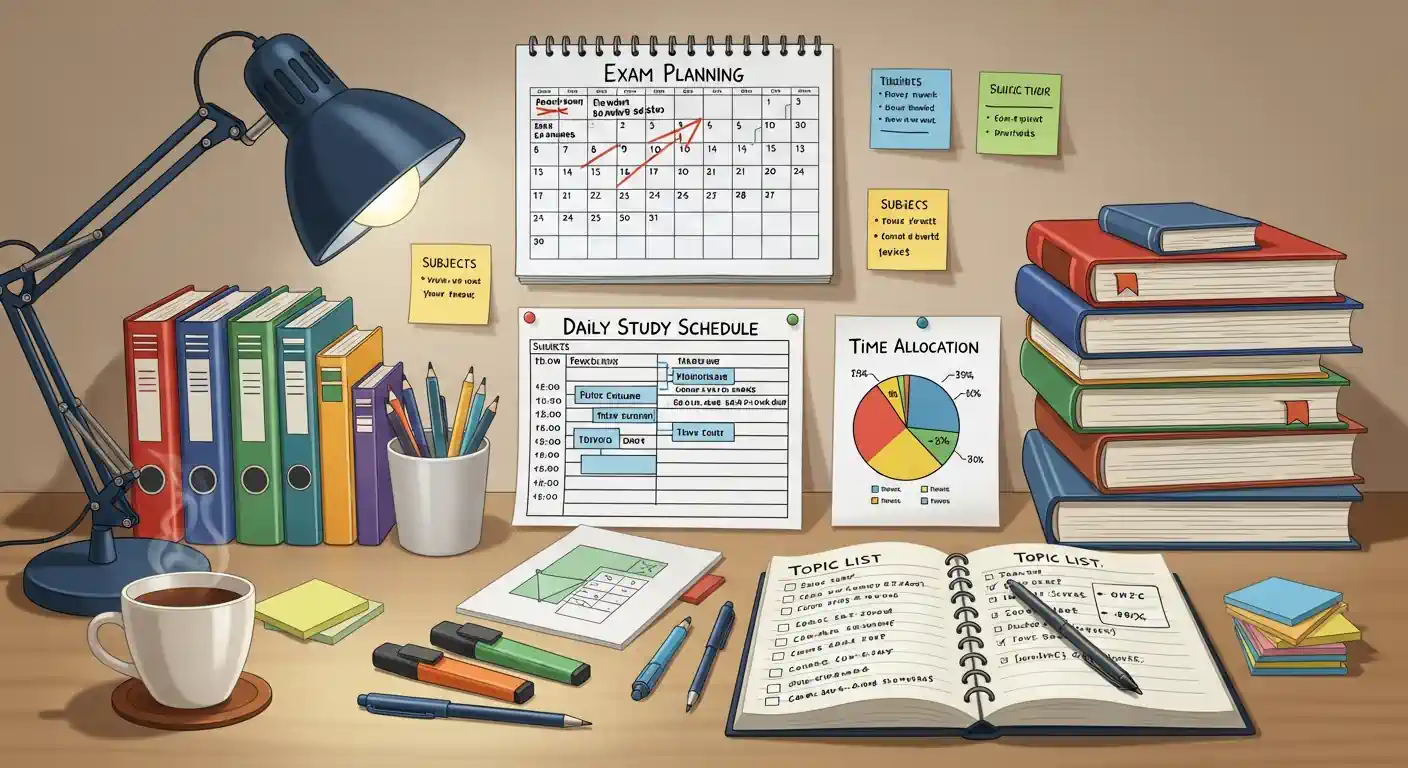
Beyond Flashcards: Creative Active Recall Strategies to Supercharge Your Exam Preparation
Exam preparation often feels like an uphill battle, especially when relying solely on passive study methods like re-reading notes. To truly master complex material and reduce exam anxiety, a shift towards active recall is essential. This article dives into innovative, creative active recall strategies that move beyond simple flashcards, offering you powerful tools to dramatically improve your memory retention and understanding. By actively retrieving information, you strengthen neural pathways, making knowledge more accessible when it matters most. Get ready to transform your study habits and approach your next exam with confidence!
Key Points:
- Active Recall Power: Go beyond passive learning to strengthen memory.
- Diverse Techniques: Explore methods like teaching, storytelling, and concept mapping.
- Neuroscience Backing: Understand how retrieval practice enhances learning.
- Anxiety Reduction: Confident recall minimizes pre-exam stress.
- Personalized Learning: Adapt strategies to fit your unique learning style.
Unlocking Deeper Learning with Creative Active Recall Strategies
The conventional wisdom of studying often emphasizes repetition and rote memorization. However, cognitive science consistently points to a more effective approach: active recall. This powerful technique involves actively retrieving information from your memory rather than passively re-reading it. While flashcards are a great start, there's a whole world of creative active recall strategies that can profoundly impact your learning and significantly improve your exam preparation techniques. Embracing these methods not only enhances memory but also builds confidence, directly aiding in managing test anxiety.
Traditional study methods can create an illusion of competence. You might feel you understand material because it looks familiar, but true understanding is proven when you can recall it without prompts. Active recall forces your brain to work harder, making the learning process more robust and durable. This isn't just about passing exams; it's about building a solid foundation of knowledge that sticks.
Why Traditional Flashcards Aren't Always Enough
Flashcards are undoubtedly a cornerstone of active recall. They prompt you to remember specific facts or definitions. However, their format can sometimes limit your ability to connect broader concepts or apply knowledge in novel ways. They are excellent for discrete pieces of information, but less effective for grasping intricate relationships, processes, or the 'why' behind the facts. This is where creative active recall strategies come into play, pushing you beyond surface-level memorization to deeper comprehension and critical thinking.
Think of it this way: flashcards are like learning individual words. Creative active recall is about learning to construct meaningful sentences and paragraphs, understanding their context, and even writing your own stories. It's about building a robust mental framework rather than just collecting disconnected data points.
Innovative Active Recall Techniques for Superior Memory Retention
Moving beyond simple question-and-answer flashcards opens up a wealth of possibilities for engaging your brain in active retrieval. These methods leverage different cognitive processes, ensuring a more holistic and flexible understanding of your study material.
The "Teach It" Method: Explaining Concepts to Others
One of the most potent active recall strategies is the "teach it" method, also known as the Feynman Technique. The premise is simple: if you can't explain it simply, you don't understand it well enough. Imagine you need to teach a complex topic to a complete novice.
- How it Works:
- Choose a concept: Select a topic you need to master.
- Explain it aloud: Articulate the concept as if to an imaginary student (or a real friend/pet). Use simple language, break it down into smaller parts.
- Identify gaps: Where do you stumble? What parts do you struggle to explain clearly? These are your weak spots.
- Revisit and simplify: Go back to your notes, clarify those areas, and then try explaining again.
- Differentiated Value: This method uniquely forces you to restructure information in your mind and identify precise gaps in your understanding, which typical flashcards don't do. It moves beyond recognizing information to truly synthesizing and communicating it. Research published in Cognitive Research: Principles and Implications (2024) consistently highlights the superior long-term retention achieved through explanation-based learning.
Storytelling and Analogy Creation: Making Learning Memorable
Our brains are hardwired for stories. Turning dry facts into a narrative or connecting new information to something already familiar through an analogy can dramatically improve memory retention. This is a highly creative active recall strategy.
- How it Works:
- For sequences or processes: Weave the steps into a short, engaging story. Give characters to key components or events.
- For abstract concepts: Create an analogy that links the abstract idea to a concrete, everyday experience. For example, explain cellular respiration using an analogy of a factory producing energy.
- Differentiated Value: This method taps into emotional memory and spatial reasoning, making information sticky. Instead of rote facts, you remember a vibrant mental movie or a relatable comparison. This technique is especially powerful for visual and kinesthetic learners.
Concept Mapping and Mind Mapping: Visualizing Connections
While concept maps might seem like a passive note-taking strategy, their true power lies in their active construction from memory. After initially learning a topic, try to draw a concept map without looking at your notes.
- How it Works:
- Start with the core idea: Place the main topic in the center or top of your page.
- Branch out: Add sub-topics and key details, connecting them with lines and labeling the relationships.
- Focus on retrieval: Don't peek at your textbook until you've exhausted your memory.
- Verify and refine: Compare your map to your notes, fill in missing links, and correct misunderstandings.
- Differentiated Value: This visual recall process helps you see the interconnectedness of information. It's excellent for developing a holistic understanding and identifying hierarchical relationships, pushing beyond isolated facts. A study by the Association for Psychological Science (2023) demonstrated that students who actively generate concept maps from memory outperform those who merely review pre-made maps.
Integrating Advanced Active Recall Techniques for Exam Success
To truly supercharge your exam preparation, integrate these creative methods with other scientifically-backed learning principles.
Spaced Repetition Reinvented: Beyond Digital Flashcards
Spaced repetition is a powerful technique where you review material at increasing intervals. While digital flashcard apps like Anki are fantastic, you can apply spaced repetition more creatively.
- Creative Application:
- Vary your recall method: Instead of just flashcards, use the "teach it" method, draw a concept map, or create a story for a topic at its scheduled review time.
- Physical "Spaced Recall Boxes": Use a series of physical boxes (or folders). When you successfully recall a concept using any creative method, move its prompt to a box for a longer review interval (e.g., Box 1: daily, Box 2: every 3 days, Box 3: weekly).
- Differentiated Value: This approach combines the scientific benefit of spaced repetition with the deeper cognitive engagement of diverse creative active recall strategies, preventing study fatigue and boredom while boosting long-term memory.
Interleaving with Active Recall: Mixing Subjects and Methods
Interleaving involves mixing different subjects or topics during a single study session. When combined with active recall, it becomes an incredibly effective strategy.
- How it Works:
- Study Topic A for a short period (e.g., 20 minutes) using a creative recall strategy like storytelling.
- Switch to Topic B for another 20 minutes, perhaps using the "teach it" method.
- Move to Topic C, creating a concept map.
- Cycle back through, actively recalling previous topics.
- Differentiated Value: Interleaving trains your brain to discriminate between concepts, improving problem-solving skills and reducing cognitive interference. It directly combats the tendency to learn topics in isolation, making your knowledge more robust and applicable in varied exam scenarios. Evidence from the Journal of Applied Research in Memory and Cognition (2024) indicates interleaving significantly improves retention and transfer of knowledge.
The Role of Self-Reflection and Feedback in Active Recall
Active recall isn't just about retrieving information; it's about learning from the retrieval process. Regularly reflect on your performance and seek feedback.
- Self-Correction: After attempting to recall a concept, immediately check your notes or textbook. Don't just skim; understand why you made a mistake or where your knowledge was incomplete. This meta-cognition is crucial for turning errors into learning opportunities.
- Peer Review: If you're using the "teach it" method with a study partner, encourage them to ask probing questions and highlight areas where your explanation is unclear. This external feedback provides valuable insights that you might miss yourself.
- Personal Opinion: From my experience, the biggest leap in learning often comes not from getting answers right, but from deeply analyzing why an answer was wrong. This process, when integrated with creative recall, solidifies understanding beyond simple memorization.
Frequently Asked Questions About Creative Active Recall
Q: How often should I practice active recall strategies?
A: Consistency is key. Aim for short, frequent active recall sessions throughout your study period, rather than cramming before an exam. Even 15-20 minutes daily, using various creative methods, is more effective than one long session per week. As you get closer to exams, increase the frequency and duration.
Q: Can these creative recall strategies help with test anxiety?
A: Absolutely. By consistently and successfully retrieving information using diverse methods, you build genuine confidence in your knowledge. This mastery directly reduces the uncertainty and fear that often fuel test anxiety, allowing you to approach exams with a calmer, more focused mindset.
Q: Are these strategies suitable for all subjects?
A: Yes, these strategies are highly adaptable. While "teach it" might seem ideal for theoretical subjects, you can explain problem-solving steps in math or scientific processes. Storytelling works for history timelines or biological cycles. Concept mapping is invaluable for any subject requiring understanding of relationships, from literature themes to economic models.
Q: How do I know which creative active recall strategy is best for me?
A: Experiment with different strategies to find what resonates most with your learning style and the specific material. Some learners thrive with visual mapping, while others prefer verbal explanation. The best strategy is the one you consistently use and find effective for boosting your memory retention and understanding.
Conclusion: Empower Your Learning Journey
Moving beyond flashcards and embracing creative active recall strategies is a transformative step in your exam preparation. By actively engaging with your material through teaching, storytelling, concept mapping, and integrated techniques like spaced repetition and interleaving, you foster deeper understanding and build resilient memory. This proactive approach not only enhances your test performance but also equips you with powerful learning skills that extend far beyond the classroom.
Ready to revolutionize your study routine? Start experimenting with these strategies today. Share your experiences in the comments below – what’s your favorite creative recall technique? Explore more ways to optimize your learning environment with articles like Optimizing Your Study Environment for Focus or learn techniques to stay calm during high-stakes periods with Mindfulness Techniques for Exam Stress Reduction.
Future Expansion Ideas:
- Gamification of Active Recall: Exploring apps and techniques that turn active recall into a game.
- AI-Powered Recall Tools: Investigating emerging AI tools that personalize active recall prompts.
- Active Recall for Practical Skills: Adapting these techniques for hands-on subjects and vocational training.
(Note: Information within this article is current as of its publication date, 2025-12-12, and draws upon recent findings in cognitive science and educational psychology. For the latest research, always consult peer-reviewed journals and academic publications.)