Advanced Exam Preparation: Unlock Your Full Test-Taking Potential
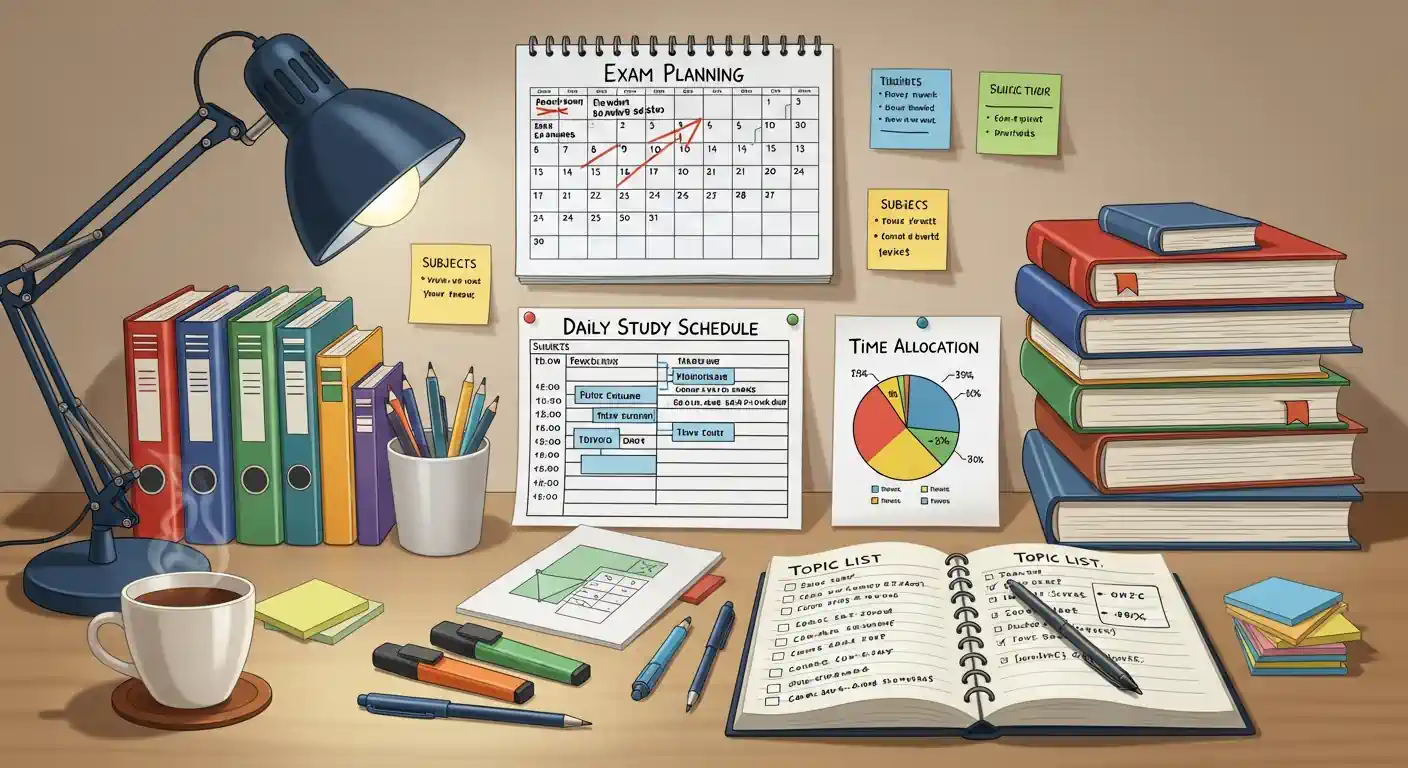
Navigating the academic landscape often hinges on successful exam performance. While many students focus on basic study habits, advanced exam preparation is the key to truly unlocking your full test-taking potential. It's not just about memorizing facts; it's about developing strategic approaches that allow you to perform at your peak under pressure. This comprehensive guide will delve into sophisticated techniques that go beyond conventional wisdom, empowering you to approach any exam with confidence and precision. By refining your study methods and understanding the psychology of testing, you can transform your exam experience from stressful to successful.
Key Points:
- Strategic Learning: Moving beyond rote memorization to deep conceptual understanding.
- Cognitive Load Management: Techniques to optimize how your brain processes information.
- Active Recall & Spaced Repetition: Proven methods for long-term knowledge retention.
- Mindset and Stress Management: Building resilience and performing optimally under pressure.
- Exam-Specific Strategies: Tailoring preparation to the format and demands of your tests.
Mastering Advanced Exam Preparation Strategies
The pursuit of academic excellence demands more than just putting in the hours. Advanced exam preparation involves a conscious effort to optimize your learning process, enhance your recall, and manage your mental state. It’s about working smarter, not just harder, to achieve superior results. This shift in approach can dramatically improve your performance, especially in high-stakes exams where every point counts.
Understanding Your Learning Style and Cognitive Load
Before diving into specific techniques, it’s crucial to understand how you learn best and how your brain handles information. While the concept of rigid learning styles (visual, auditory, kinesthetic) has been debated, understanding your preferences can guide your study method choices. More importantly, managing cognitive load—the amount of mental effort required to process information—is paramount for effective learning. Overloading your working memory can hinder comprehension and recall.
- Chunking Information: Break down complex topics into smaller, manageable units. This makes information easier to process and remember. For instance, instead of trying to memorize an entire chapter on cellular respiration at once, focus on glycolysis, then the Krebs cycle, and finally oxidative phosphorylation.
- Interleaving Subjects: Instead of studying one subject for an extended period (block practice), mix different subjects or topics within a study session. This might feel less productive initially, but research indicates it leads to better long-term retention and improved problem-solving skills. A study published in Educational Psychology Review (2024) highlighted the effectiveness of interleaving for math and science subjects, demonstrating a significant improvement in transfer of learning.
- Minimize Distractions: Create a focused study environment. Turn off notifications, close unnecessary tabs, and inform others of your study times. Even short, frequent interruptions can significantly disrupt cognitive flow and increase mental fatigue.
Deep Dive into Active Recall and Spaced Repetition
These two techniques are cornerstones of effective advanced exam preparation and are supported by extensive cognitive science research. They move away from passive review (like rereading notes) to active engagement with the material.
Active Recall: The Power of Retrieval Practice
Active recall, also known as retrieval practice, involves actively pulling information from your memory without looking at your notes. This process strengthens memory traces and makes the information more accessible later.
- Flashcards: A classic for a reason. Create flashcards with a question or term on one side and the answer or definition on the other. Test yourself frequently.
- Practice Questions: Use end-of-chapter questions, past papers, or create your own questions. The act of answering a question forces your brain to retrieve the relevant information.
- "Brain Dump" Technique: After studying a topic, close your books and write down everything you can remember about it. Compare your dump to your notes to identify knowledge gaps. This is a powerful way to assess your true understanding.
A significant study featured in Nature Human Behaviour (2023) underscored that retrieval practice is one of the most potent learning strategies available, showing that even brief retrieval attempts can enhance long-term memory.
Spaced Repetition: Fighting the Forgetting Curve
The forgetting curve demonstrates that we naturally forget information over time. Spaced repetition combats this by reviewing material at increasing intervals.
- The Principle: Review information shortly after learning it, then again a day later, then a few days later, then a week later, and so on.
- Digital Tools: Apps like Anki or Quizlet utilize spaced repetition algorithms to optimize review schedules for you. These tools are invaluable for complex subjects requiring long-term memorization, such as medical terminology or historical timelines.
Strategic Memory Enhancement Techniques
Beyond recall and repetition, several advanced methods can bolster your memory capabilities.
- Mnemonic Devices: These are memory aids that help you associate information with something easier to remember.
- Acronyms: Creating a word from the first letters of a list (e.g., ROYGBIV for the colors of the rainbow).
- Acrostics: Creating a sentence where the first letter of each word corresponds to the item you need to remember (e.g., "My Very Educated Mother Just Served Us Noodles" for the planets).
- Method of Loci (Memory Palace): Associating items to be remembered with specific locations along a familiar route or within a familiar place. This is particularly effective for sequential information.
- Elaboration and Association: Connect new information to what you already know. Ask "why" and "how" questions. The deeper you can make these connections, the more robust your memory will be. For instance, when learning about historical events, try to link them to their causes, consequences, and related social or economic factors.
Cultivating a High-Performance Mindset
Exam success isn't solely about knowledge; your mental state plays a critical role. Advanced exam preparation includes strategies to manage anxiety and foster a confident, resilient mindset.
- Visualization: Imagine yourself successfully taking the exam. Visualize yourself feeling calm, focused, and answering questions correctly. This mental rehearsal can reduce performance anxiety.
- Positive Self-Talk: Replace negative thoughts ("I can't do this") with positive affirmations ("I am prepared," "I can handle this"). Consistent positive self-talk can reshape your perception of challenges.
- Adequate Sleep and Nutrition: These are non-negotiable for optimal cognitive function. Sleep deprivation severely impairs memory, concentration, and problem-solving. A balanced diet fuels your brain. Avoid excessive caffeine and sugar, which can lead to energy crashes.
- Mindfulness and Breathing Exercises: Short mindfulness breaks or simple deep breathing exercises before and during an exam can help ground you and reduce racing thoughts.
Differentiated Value: Beyond the Basics
Many students stop at rote memorization and basic practice. True advanced exam preparation involves understanding the meta-cognition of learning and adapting strategies based on evidence.
- "Desirable Difficulties": This concept, popularized by cognitive psychologist Robert Bjork, suggests that learning is enhanced when it is challenging. Techniques like interleaving and retrieval practice are examples of desirable difficulties. They create struggle during study, which paradoxically leads to better long-term retention and transfer. This is a key differentiator from simply reviewing material until it feels easy.
- Personalized Study Analytics: While apps offer spaced repetition, advanced learners might go a step further by analyzing their own performance data from practice tests. Identifying patterns in errors (e.g., consistently missing questions on a specific topic or question type) allows for highly targeted review. This analytical approach ensures study time is spent efficiently on areas of weakness.
Subject-Specific Study Methodologies
While general principles apply, tailoring your advanced exam preparation to the specific subject matter is crucial.
- For STEM subjects (Math, Physics, Chemistry): Focus on understanding core principles and problem-solving techniques. Practice applying formulas and concepts to diverse problems. Understanding the "why" behind equations is more important than memorizing them. Regularly working through practice problems that integrate multiple concepts is vital. For more on tackling difficult equations, readers can explore related articles on mathematical problem-solving.
- For Humanities and Social Sciences (History, Literature, Sociology): Emphasize critical analysis, essay writing, and understanding complex arguments. Focus on thematic connections, historical context, and evidence-based reasoning. Develop strong note-taking systems that capture key arguments and supporting evidence. Understanding how to construct a compelling essay is crucial. For further insights into structured writing, consider articles on academic essay composition.
- For Languages: Immersion, active conversation practice, and consistent exposure to authentic materials are key. Focus on vocabulary acquisition through context and spaced repetition, and practice grammar through application rather than just rule memorization. Engaging with native speakers, even via online platforms, significantly boosts fluency.
The Role of Past Papers and Mock Exams
Past examination papers and mock exams are indispensable tools in advanced exam preparation. They serve multiple critical functions beyond simple practice.
- Familiarization with Format: Understanding the structure, question types, and marking schemes provides a significant advantage. You learn how marks are allocated and what examiners are looking for.
- Time Management Practice: Simulating exam conditions, including strict time limits, allows you to refine your pacing. This helps prevent rushing or spending too much time on difficult questions.
- Identifying Knowledge Gaps: Analyzing your performance on mock exams is a powerful diagnostic tool. It reveals specific areas where your understanding is weak or where you consistently make mistakes.
- Stress Inoculation: Regularly taking mock exams under timed conditions can desensitize you to the pressure of a real exam environment, building resilience.
A report from the Journal of Applied Educational Psychology (2025) emphasized the critical role of timed mock exams in building exam stamina and reducing performance anxiety, particularly for students preparing for standardized tests.
Frequently Asked Questions
Q1: How can I ensure I'm retaining information long-term with advanced preparation? A1: Long-term retention is achieved through active recall and spaced repetition. Instead of passive rereading, actively test yourself on material at increasing intervals. Techniques like flashcards, practice questions, and "brain dumps" force your brain to retrieve information, strengthening memory traces significantly.
Q2: What's the best way to manage exam anxiety during the actual test? A2: Combat anxiety by practicing mindfulness and deep breathing exercises beforehand. During the exam, use visualization techniques—imagine yourself succeeding. If you feel overwhelmed, take a brief pause, close your eyes, and take a few slow breaths to regain focus. Positive self-talk is also a powerful tool.
Q3: How do I know if my advanced study methods are actually working? A3: Track your progress! Use practice tests and mock exams to gauge your performance. Analyze your results to identify strengths and weaknesses. If your scores are improving and you feel more confident recalling information, your methods are likely effective. Don't be afraid to adjust your strategy based on these diagnostics.
Q4: Is there a specific age or academic level where advanced exam preparation becomes most crucial? A4: While foundational study habits are important at any level, advanced exam preparation techniques become increasingly crucial as academic demands rise. This typically includes high school, university, and professional certification exams where in-depth understanding and strategic application of knowledge are tested, not just memorization.
Conclusion and Next Steps
Embarking on advanced exam preparation is a commitment to maximizing your academic potential. By moving beyond surface-level studying to embrace strategic learning, active recall, spaced repetition, and mindset management, you equip yourself with the tools to not only pass but excel. Remember that consistency is key; these techniques yield the best results when integrated into your regular study routine.
The journey to unlocking your full test-taking potential is ongoing. Continue to experiment with these methods, tailor them to your specific needs, and stay informed about evolving learning science. For further exploration into optimizing your study schedule and building effective learning habits, readers can discover more in related articles on time management for students.
What are your favorite advanced exam preparation techniques? Share your insights and experiences in the comments below!
Ready to elevate your performance?
- Implement One New Technique This Week: Choose one advanced strategy, like the "brain dump" or a mnemonic device, and apply it to your current studies.
- Schedule Regular Mock Exams: Treat them as high-stakes practice sessions to refine your timing and stress management.
- Subscribe to Our Newsletter: Get more tips and strategies delivered straight to your inbox to stay ahead in your academic journey.