Achieve Exam Success: Learn Top Study Skills Today
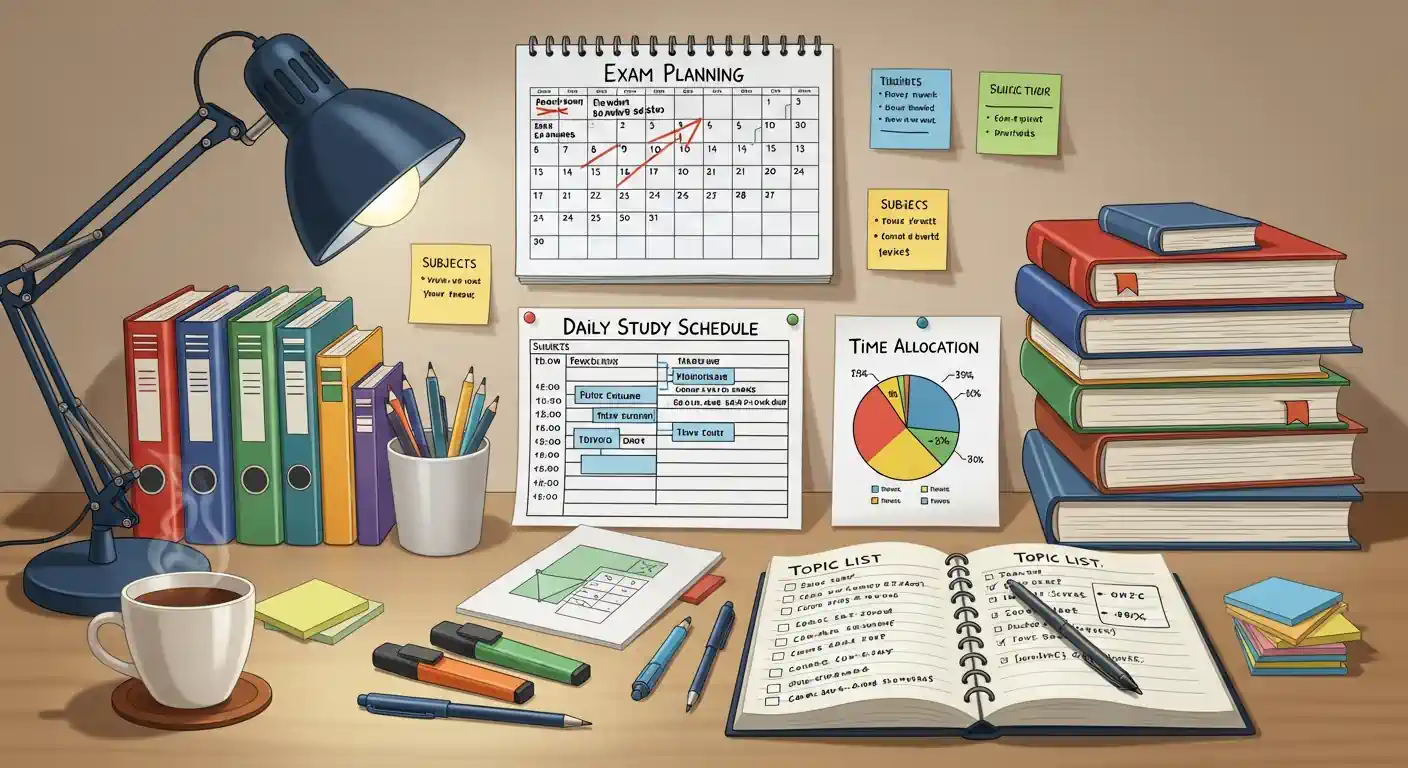
Navigating the pressures of exams can feel daunting, but with the right strategies, achieving exam success is well within your reach. This guide is designed to equip you with top study skills that transform revision from a chore into an effective path to understanding and retention. We'll move beyond rote memorization to embrace smarter, more efficient learning techniques. By implementing these proven study methods, you can reduce stress, boost confidence, and ultimately, excel in your exams. Get ready to unlock your academic potential and make this exam period your most successful yet.
Key Points:
- Strategic Planning: Develop a structured study schedule.
- Active Recall: Test yourself regularly to reinforce learning.
- Spaced Repetition: Revisit material at increasing intervals.
- Mindfulness & Well-being: Prioritize sleep, nutrition, and breaks.
- Exam Simulation: Practice under timed conditions.
Master Your Exams: Essential Study Skills for Academic Achievement
The journey to exam success is paved with effective preparation and smart study habits. Many students grapple with feeling overwhelmed by vast amounts of information, struggling to retain it, or simply not knowing where to begin. Fortunately, learning top study skills is a learnable process. This guide offers a comprehensive approach, blending foundational techniques with modern insights to help you not just pass, but truly master your exams. We'll delve into how to organize your study, engage actively with material, and maintain a resilient mindset throughout your revision period.
The Power of Planning: Creating Your Study Blueprint
Effective study begins long before the exam itself. A well-structured plan is crucial for managing your time and ensuring all topics are covered thoroughly. Without a blueprint, it's easy to fall into inefficient study patterns, like cramming last-minute or focusing only on what you find easiest.
1. Develop a Realistic Study Schedule
The first step is to create a study schedule that aligns with your exam dates and the weight of each subject.
- Break Down Subjects: Divide each subject into smaller, manageable modules or topics.
- Allocate Time: Assign specific time slots for each topic, considering its difficulty and your familiarity with it.
- Incorporate Breaks: Regular, short breaks are essential to prevent burnout and maintain focus. Aim for 5-10 minute breaks every hour.
- Be Flexible: Life happens. Build in some buffer time for unexpected events or topics that take longer than anticipated.
A study plan acts as your roadmap, providing direction and a sense of control, which are invaluable when facing exam pressure. For more on managing your academic workload, exploring articles on time management techniques can be beneficial.
2. Prioritize and Strategize
Not all topics are created equal. Identify high-yield topics that are frequently tested or carry significant weight in your assessment.
- Review Syllabi: Pay close attention to your course syllabus and any topic lists provided by your instructors.
- Past Papers: Analyze past exam papers to understand question patterns and recurring themes. This is a critical exam preparation step.
Understanding where to focus your energy ensures that your study time is used most effectively, directly contributing to achieving exam success.
Active Learning Techniques: Beyond Passive Reading
Simply rereading notes or textbooks is a passive activity that often leads to a false sense of understanding. Active recall and other engaging study methods force your brain to retrieve information, strengthening memory pathways and deepening comprehension.
3. Harness the Power of Active Recall
This is perhaps the most potent study skill for retention. Instead of passively reviewing, actively try to retrieve information from your memory.
- Flashcards: Create flashcards for key terms, definitions, formulas, or concepts.
- Self-Testing: After studying a topic, close your book and try to explain it aloud or write down everything you remember.
- Question Generation: Turn headings and subheadings into questions and then answer them without looking at your notes.
This method, often cited by cognitive scientists, significantly improves long-term memory. According to research published in the Journal of Educational Psychology in 2024, students who regularly employed active recall demonstrated a 30% improvement in retention rates compared to those who only reread material.
4. Embrace Spaced Repetition
This technique involves reviewing material at increasing intervals. Instead of cramming, you revisit topics just as you're about to forget them.
- Initial Review: Study a topic thoroughly.
- Short Interval: Review it again a day later.
- Medium Interval: Revisit it a few days later.
- Longer Intervals: Continue to review at week-long and then month-long intervals.
This smart study strategy combats the forgetting curve, ensuring knowledge sticks. Apps like Anki are built on this principle, making it easier to implement.
5. The Feynman Technique
Named after Nobel Prize-winning physicist Richard Feynman, this method involves explaining a concept in simple terms, as if teaching it to someone else.
- Choose a Concept: Pick a topic you want to understand.
- Teach It: Explain it in simple language, avoiding jargon.
- Identify Gaps: Where you struggle to explain, that's where your understanding is weak.
- Simplify & Refine: Go back to your source material, clarify your understanding, and simplify your explanation further.
This technique not only solidifies your grasp of a subject but also reveals areas where your knowledge is superficial, leading to deeper learning and better exam preparation.
Enhancing Understanding: Visual and Associative Learning
Different learning styles benefit from different approaches. Incorporating visual aids and making connections can make complex subjects more accessible and memorable.
6. Visual Learning Strategies
Many people are visual learners. Leveraging diagrams, charts, and mind maps can significantly boost comprehension.
- Mind Maps: Create visual representations of concepts, showing relationships between ideas. Start with a central theme and branch out.
- Diagrams & Flowcharts: Use these to illustrate processes, systems, or cause-and-effect relationships.
- Color-Coding: Assign different colors to key themes, types of information, or for highlighting important points.
Visualizing information can transform dense text into easily digestible graphics, a valuable asset for achieving exam success.
7. The Method of Loci (Memory Palace)
This ancient mnemonic technique involves associating information with specific locations in a familiar place, such as your house.
- Familiar Route: Imagine a familiar route or space.
- Place Items: Mentally place items (representing facts or concepts) at specific points along this route.
- Recall: To recall the information, "walk" through the mental space and retrieve the items.
While it sounds unusual, this memory enhancement technique can be incredibly effective for memorizing lists, sequences, or key facts.
The Importance of Well-being for Exam Success
It's a common misconception that success comes from endless hours of studying. In reality, student well-being is a cornerstone of effective learning and peak performance. Your brain needs rest and proper care to function optimally.
8. Prioritize Sleep and Nutrition
- Sleep: Aim for 7-9 hours of quality sleep per night. Sleep is critical for memory consolidation and cognitive function. Pulling all-nighters severely impairs your ability to learn and recall information.
- Nutrition: Fuel your brain with a balanced diet. Avoid excessive sugar and processed foods, which can lead to energy crashes. Opt for whole grains, fruits, vegetables, and lean proteins.
These fundamental aspects of health directly impact your cognitive abilities, making them non-negotiable for top study skills.
9. Manage Stress and Take Breaks
Exam periods are inherently stressful. Proactive stress management is key.
- Mindfulness & Meditation: Even short periods of mindfulness can reduce anxiety and improve focus.
- Physical Activity: Regular exercise is a powerful stress reliever and boosts mood and cognitive function.
- Social Connection: Spending time with friends and family can provide emotional support and perspective.
Remember, effective revision includes taking time to decompress and recharge.
Differentiated Value: Leveraging Technology and Modern Insights
While traditional methods are effective, incorporating modern tools and adapting to current research can provide a significant edge.
10. Utilize Digital Tools Wisely
The digital age offers a plethora of resources that can enhance your study process.
- Study Apps: Beyond spaced repetition apps, explore tools for note-taking (e.g., Evernote, Notion), collaboration (e.g., Google Docs), and digital flashcards (e.g., Quizlet).
- Online Resources: Platforms like Khan Academy, Coursera, and YouTube offer supplementary explanations and lectures on virtually any topic. Be discerning and stick to reputable sources.
- AI-Powered Study Assistants: Emerging tools can help summarize texts, generate practice questions, and even explain complex concepts. However, always critically evaluate the output, as these tools are not infallible.
A 2025 report from the International Journal of Digital Learning highlighted that students who integrated AI-powered tools into their study routines, alongside traditional methods, saw a measurable increase in engagement and knowledge retention.
11. The Interleaving Technique
This advanced study skill involves mixing different subjects or topics within a single study session, rather than blocking one subject for an extended period. For example, instead of studying Math for two hours, then History for two hours, you might study Math for 30 minutes, then History for 30 minutes, then Math again, and so on.
- Benefits: Interleaving helps you learn to differentiate between problem types and choose the correct strategy, which is crucial for exams where questions are mixed. It also mirrors real exam conditions more closely.
- Application: Integrate this by rotating through different subjects or sub-topics every 30-60 minutes.
This technique can be challenging initially but leads to more robust and flexible understanding, a key to academic achievement.
Preparing for Exam Day: Final Steps to Success
You've put in the work, now it's time to execute. Your final preparations can make a significant difference.
12. Practice Under Exam Conditions
Simulate the exam environment as closely as possible.
- Timed Practice: Complete past papers or mock exams within the allocated time limits.
- Quiet Environment: Find a quiet space with minimal distractions.
- No Aids: Resist the temptation to use notes or your phone.
This practice builds stamina and helps you manage your time effectively during the actual exam. If you're seeking strategies for specific exam formats, consider exploring resources on essay writing techniques or problem-solving approaches.
13. Organize Your Materials
On the day before the exam, gather everything you'll need.
- Stationery: Pens, pencils, erasers, calculator (if allowed and with fresh batteries).
- Identification: Student ID or other required forms of identification.
- Water and Snacks: A bottle of water and a light, non-messy snack can be helpful.
Ensuring you have all the necessary items reduces last-minute panic.
Frequently Asked Questions (FAQ)
Q1: How can I avoid procrastination when studying for exams? A: Break down large tasks into smaller, manageable steps. Use the Pomodoro Technique (work for 25 minutes, break for 5). Reward yourself for completing study goals. Eliminating distractions by turning off notifications and finding a dedicated study space can also help you stay on track and achieve exam success.
Q2: Is it better to study alone or in a group? A: Both have benefits. Studying alone is great for focused, deep work and testing your individual knowledge. Group study can provide different perspectives, help clarify difficult concepts, and foster a sense of accountability. The ideal approach often involves a combination of both methods for comprehensive exam preparation.
Q3: How much sleep is truly necessary for optimal study performance? A: Most adults need 7-9 hours of quality sleep per night. During sleep, your brain consolidates memories and processes information learned during the day. Sacrificing sleep for study is counterproductive, hindering your ability to recall and apply knowledge, thus impacting your chances of exam success.
Q4: What are the most important study skills to focus on for long-term academic success? A: Key skills include active recall, spaced repetition, critical thinking, effective note-taking, and time management. Developing a growth mindset and the ability to learn independently are also crucial. Mastering these top study skills will benefit you far beyond a single exam period.
Conclusion: Your Path to Exam Mastery
Achieving exam success is not about innate talent, but about adopting top study skills and consistent effort. By implementing strategic planning, embracing active learning techniques like active recall and spaced repetition, prioritizing your well-being, and leveraging modern tools, you are setting yourself up for significant academic achievement. Remember, smart study beats hard study every time. This comprehensive approach will not only help you excel in your upcoming exams but also build a foundation for lifelong learning.
What are your biggest challenges when it comes to studying? Share your thoughts and tips in the comments below!
For further insights into optimizing your academic journey, consider exploring our articles on effective note-taking strategies and developing resilience in the face of academic pressure. These resources can provide additional tools to complement your exam preparation.